Buying guide / metal identification
How to Tell If Sterling Silver Is Real
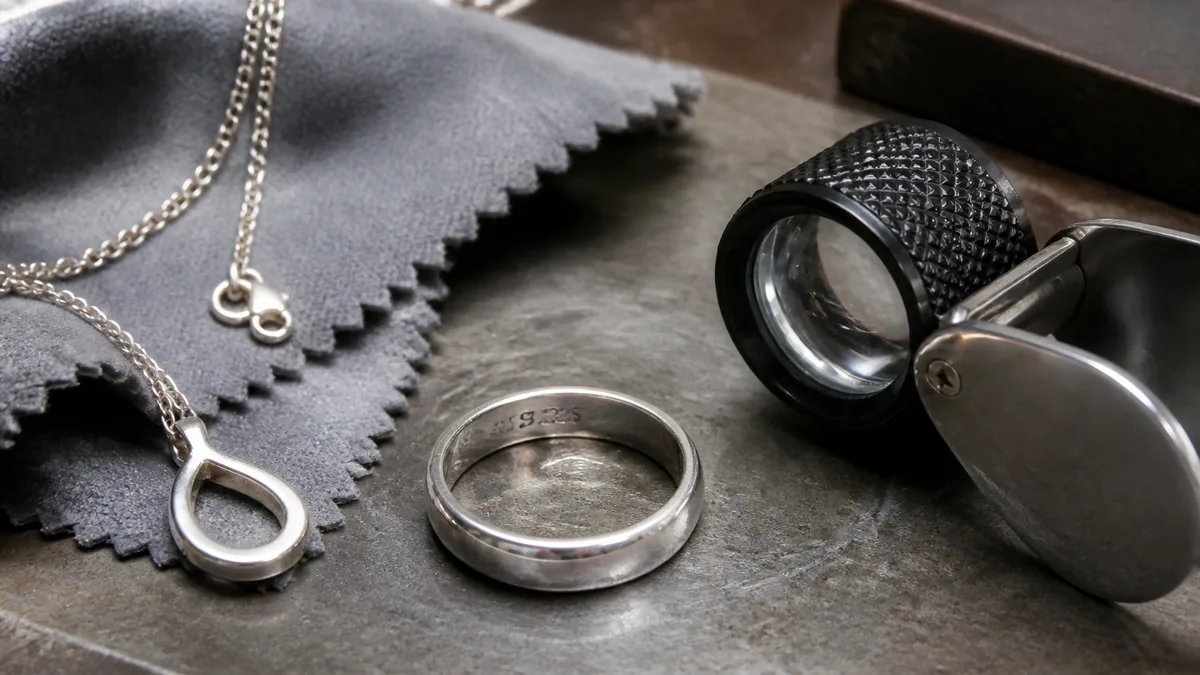
Start with the hallmark, not the home test. Genuine sterling silver is stamped with a purity mark such as 925, S925, or Sterling. Home tests like a magnet can only rule out certain fakes, not prove the piece is silver — and some popular "tests" online are misleading. For a piece where authenticity matters, a professional test is the reliable answer.
Why fake silver is a real problem
Plenty of jewelry sold as "sterling silver" is actually a cheap base metal — brass, copper, or nickel — covered in a thin layer of silver plating. Within weeks, that plating rubs off, exposing the base metal underneath. This can turn skin green and, if the base contains nickel, trigger allergic contact dermatitis. Learning to verify a hallmark and understand which tests actually work protects both your money and your skin.
Step 1: Read the hallmark
Genuine precious-metal jewelry is usually stamped with a purity mark. Check the inside of a ring band, the clasp of a necklace, or the post of an earring for these marks:
- 925 or S925 — 92.5% silver (the standard for sterling)
- Sterling or Ster — sterling silver
- 999 or Fine Silver — 99.9% silver (too soft for most everyday jewelry, but sometimes used in pendants)
A hallmark is a starting point, not proof. Counterfeiters can stamp "925" on base metal. A suspiciously low price for a heavy piece is a warning sign regardless of the stamp.
Which home tests work — and which don't
Many "how to test silver" guides list tests that sound scientific but are unreliable in practice. Here is an honest breakdown.
Tests with limited use
| Test | What it actually tells you | The catch |
|---|---|---|
| Magnet test | Silver and its usual 7.5% copper alloy are not magnetic. | A magnet only rules out iron-based fakes. Copper, brass, aluminum, and tin are also non-magnetic, so a piece can pass the magnet test and still not be silver. |
| Tarnish / white-cloth test | Rubbing can lift dark oxidation onto a cloth. | Copper and brass also oxidize dark, so black marks only mean the surface has oxidized — not that it is silver. |
| Smell test | Solid silver itself is essentially odorless. | 925 silver still contains 7.5% copper and can pick up odors from skin and oils, so smell alone is not reliable. |
Tests to ignore
| Test | Why it is misleading |
|---|---|
| Ice test | Silver conducts heat slightly better than copper (429 vs 401 W/mK), but the difference is far too small to see with melting ice. A copper-plated fake will "melt" ice just as fast. |
| Sound / ring test | The "bell-like chime" depends on shape, thickness, and size, not the metal. A genuine silver piece can sound dull and a fake can ring clearly. |
Tests that actually verify silver
If you want real confirmation, these are the methods jewelers and professionals use:
- Acid test. A small drop of testing acid on an inconspicuous spot reacts differently with silver than with base metals. This is the classic jeweler's test but can leave a mark, so it is best left to a professional.
- Density (specific gravity) test. Weighing the piece in air and in water gives its density, which silver shares with very few common metals. This is a reliable at-home method if you have a precise scale.
- Professional assay or XRF. A jeweler or assayer can confirm composition quickly and non-destructively. This is the definitive answer for valuable pieces.
Buying smart matters more than testing
You should not have to test your own jewelry. The best protection is buying from a reputable seller who states the metal composition, gives a clear return policy, and stands behind the hallmark. If a deal seems too good to be true for a "solid silver" piece, it usually is.
Frequently asked questions
Does fake silver turn your skin green?
Usually, yes. Fake "silver" is often copper or brass, which react with sweat and lotions to form green copper salts that stain the skin. Genuine 925 sterling silver rarely causes green skin.
What does "silver plated" mean?
Silver plated means a cheap base metal (often copper or nickel) has been coated with a thin layer of silver. It is not solid silver, has little intrinsic value, and the plating wears off quickly with daily use.
Can real 925 silver stick to a magnet?
No. Neither silver nor its usual 7.5% copper alloy is magnetic, so solid sterling silver will not stick. The reverse is not true, though — many non-silver metals are also non-magnetic, so passing the magnet test does not prove a piece is silver.
How can I test silver at home without damaging it?
The hallmark is the first and safest check. Beyond that, a density (specific gravity) test with a precise scale is non-destructive and reasonably reliable. Acid tests can leave a mark, so leave those to a professional.
Updated: 2026-08-18. See the GemVerity editorial method for how we verify material claims.