Stone library / cultural browsing
Gemstones by zodiac sign
Western zodiac gemstone associations are a cultural browsing tradition — not a scientific classification, and not the same thing as a birthstone. Use these links to explore common zodiac-stone pairings, then open the individual guide for mineral facts, treatment disclosure, durability, and care.
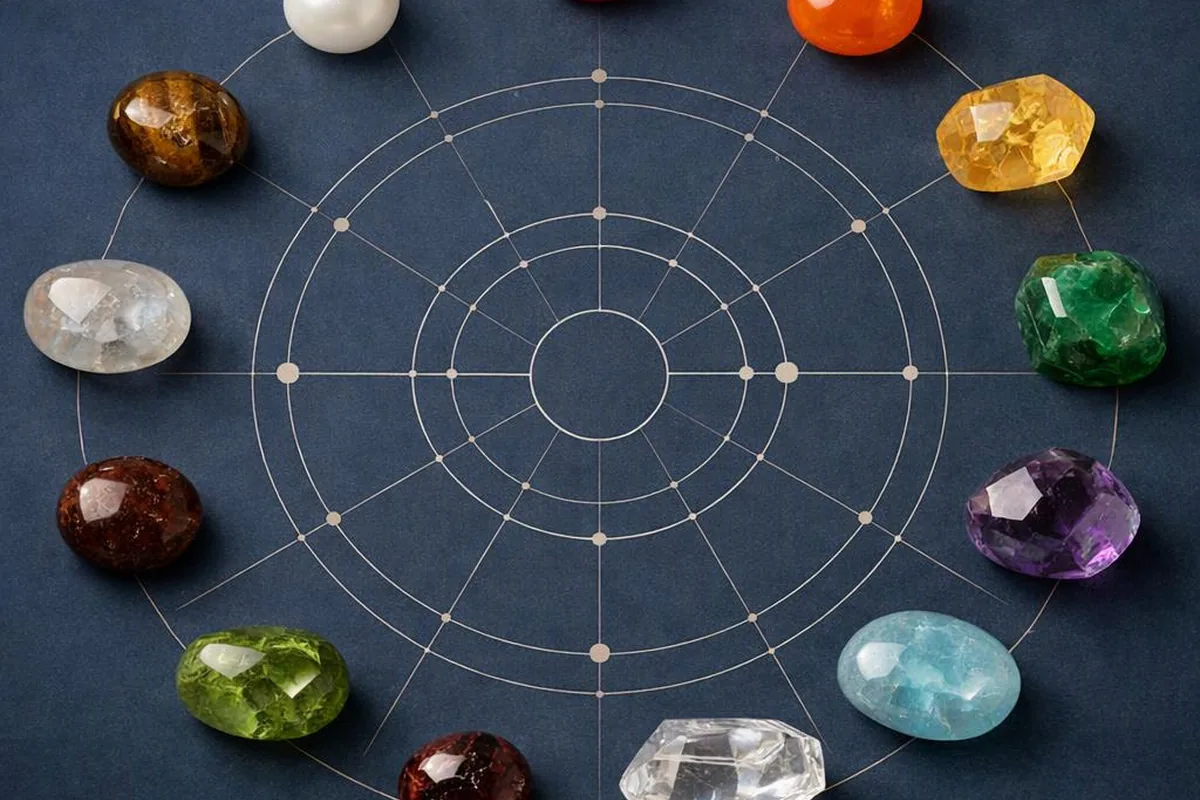
Aries through Gemini
Spring signs
Garnet
A commonly listed traditional stone for Aries in Western zodiac charts. Garnet occurs in red, orange, green, and other colors.
Aries (modern) / Mar 21 - Apr 19Rose Quartz
A modern cultural pairing for Aries. Rose quartz is a pink quartz variety with common inclusions and treatment questions.
Taurus / Apr 20 - May 20Rose Quartz
A frequently listed modern association for Taurus. Compare the mineral guide before buying.
Taurus (traditional) / Apr 20 - May 20Lapis Lazuli
A traditional association for Taurus in some Western lists. Lapis is a deep blue rock aggregate, not a single mineral.
Gemini / May 21 - Jun 20Agate
A frequent zodiac association for Gemini, with varied agate material types. Bright color often requires treatment questions.
Gemini (modern) / May 21 - Jun 20Citrine
A modern pairing for Gemini. Yellow-orange quartz with important treatment disclosure questions.
Cancer through Virgo
Summer signs
Moonstone
A common cultural pairing for Cancer and moonstone traditions. White to gray feldspar with an optical sheen.
Cancer (modern) / Jun 21 - Jul 22Opal
A modern association for Cancer in some lists. Opal body color and play-of-color vary greatly.
Leo / Jul 23 - Aug 22Peridot
Peridot is often paired with Leo in contemporary Western lists. A characteristic green olivine with a distinct material identity.
Leo (modern) / Jul 23 - Aug 22Citrine
A modern golden association for Leo. Yellow-orange quartz with treatment disclosure context.
Virgo / Aug 23 - Sep 22Kyanite
A cultural browsing association for Virgo, not a historical universal. Often blue with directional hardness concerns.
Virgo (modern) / Aug 23 - Sep 22Amazonite
A modern pairing for Virgo. Green to blue-green feldspar with a distinct color range.
Libra through Sagittarius
Autumn signs
Opal
Opal is commonly linked with Libra in modern zodiac references. Hydrated silica with or without play-of-color.
Libra (traditional) / Sep 23 - Oct 22Lapis Lazuli
A traditional association for Libra. Deep blue aggregate material with pyrite and calcite context.
Scorpio / Oct 23 - Nov 21Topaz
Topaz appears in several Scorpio association lists and has varied colors. Yellow, blue, and colorless are common.
Scorpio (modern) / Oct 23 - Nov 21Obsidian
A modern cultural pairing for Scorpio. Black volcanic glass, not a crystalline mineral.
Sagittarius / Nov 22 - Dec 21Turquoise
A well-known cultural pairing for Sagittarius; treatment disclosure remains important. Blue to green-blue phosphate mineral.
Sagittarius (modern) / Nov 22 - Dec 21Blue Chalcedony
A modern association for Sagittarius. Blue to gray-blue chalcedony with quartz-group durability.
Capricorn through Pisces
Winter signs
Garnet
Garnet is a frequently repeated traditional association for Capricorn. Red is common, but garnet occurs in several colors.
Capricorn (modern) / Dec 22 - Jan 19Black Tourmaline
A modern cultural pairing for Capricorn. Commonly black schorl with tourmaline-group care questions.
Aquarius / Jan 20 - Feb 18Amethyst
Amethyst is often associated with Aquarius in Western lists. Purple quartz with color zoning and heat-treatment context.
Aquarius (modern) / Jan 20 - Feb 18Labradorite
A modern association for Aquarius. Gray body color with colorful labradorescence.
Pisces / Feb 19 - Mar 20Aquamarine
Aquamarine is a common modern association for Pisces. Blue to blue-green beryl, often assessed for clarity and color.
Pisces (modern) / Feb 19 - Mar 20Larimar
A modern cultural pairing for Pisces. Soft blue pectolite from a single geographic source.
A separate system
Zodiac stones vs. birthstones
A zodiac stone is a cultural pairing with a sign of the zodiac, based on folklore and retail tradition. A birthstone is a gemstone assigned to a birth month, most often following the modern list standardized by jewelers and trade associations. They are different systems: a person born in July is a Leo by zodiac (often paired with peridot or citrine) but has ruby as their modern July birthstone. The table below lists the widely used modern birthstone for each month.
| Month | Modern birthstone |
|---|---|
| January | Garnet |
| February | Amethyst |
| March | Aquamarine |
| April | Diamond |
| May | Emerald |
| June | Pearl, Alexandrite, or Moonstone |
| July | Ruby |
| August | Peridot or Spinel |
| September | Sapphire |
| October | Opal or Tourmaline |
| November | Topaz or Citrine |
| December | Turquoise, Tanzanite, or Zircon |
Birthstone lists vary between traditions (ancient, traditional, and modern) and between regions. The table above reflects the widely used modern list; see the GIA birthstone reference for the authoritative breakdown.