Stone library / gemstone family
Beryl Gemstone Family
Beryl is one mineral species behind several familiar gems, including emerald, aquamarine and morganite. Compare the family by color, naming boundaries, treatment questions and jewelry use before relying on a seller label.
What is beryl?
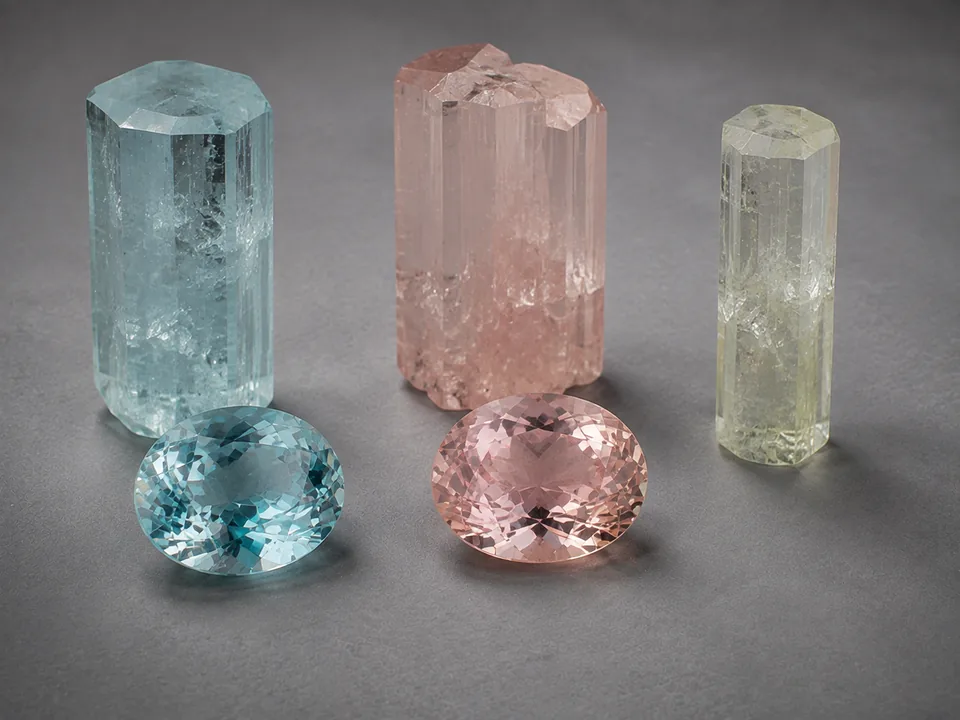
Beryl is a beryllium aluminum silicate mineral with the formula Be3Al2Si6O18. It crystallizes in the hexagonal system and often forms elongated, six-sided crystals. Gem names within the family usually reflect color, but the boundary between adjacent color names is not always something a photograph can settle.
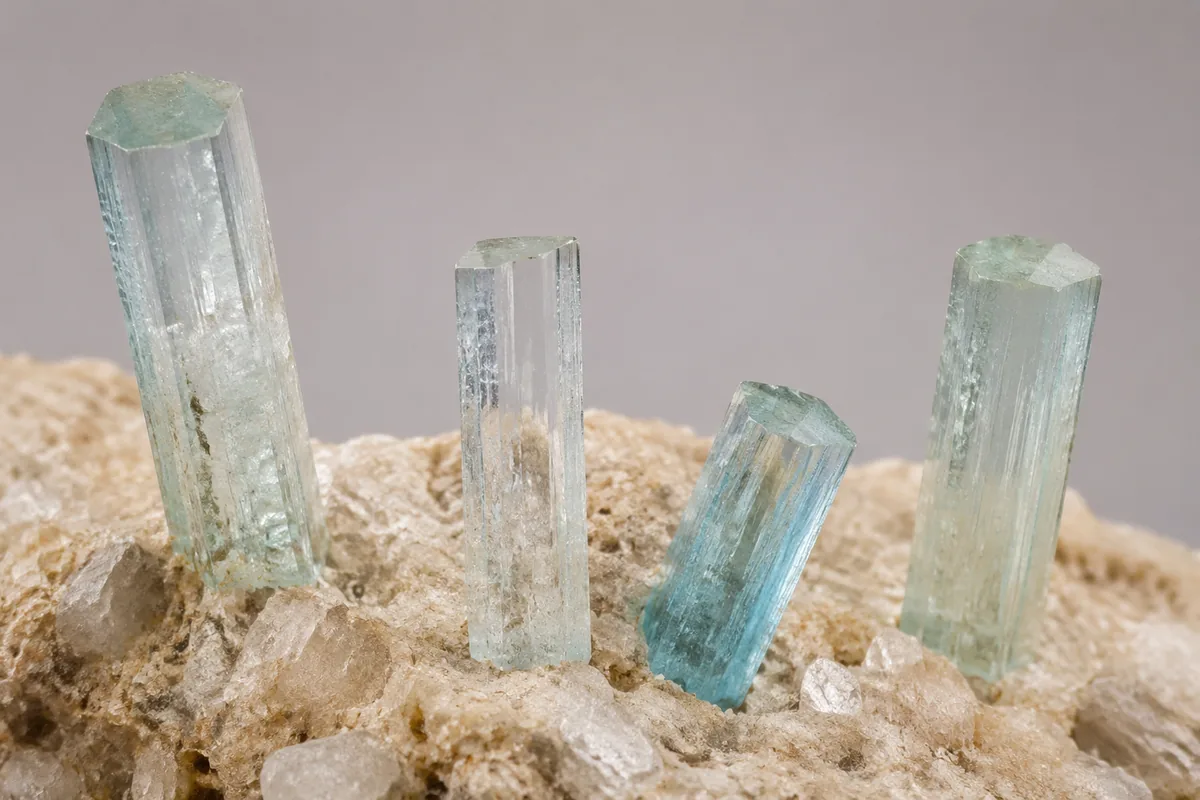
Trace elements help produce the family’s color range. Chromium or vanadium is associated with emerald green, iron contributes to many blue, greenish-blue and yellow beryls, and manganese is associated with pink morganite and red beryl. These are useful mineralogical explanations—not a home identification test.
Beryl varieties and colors compared
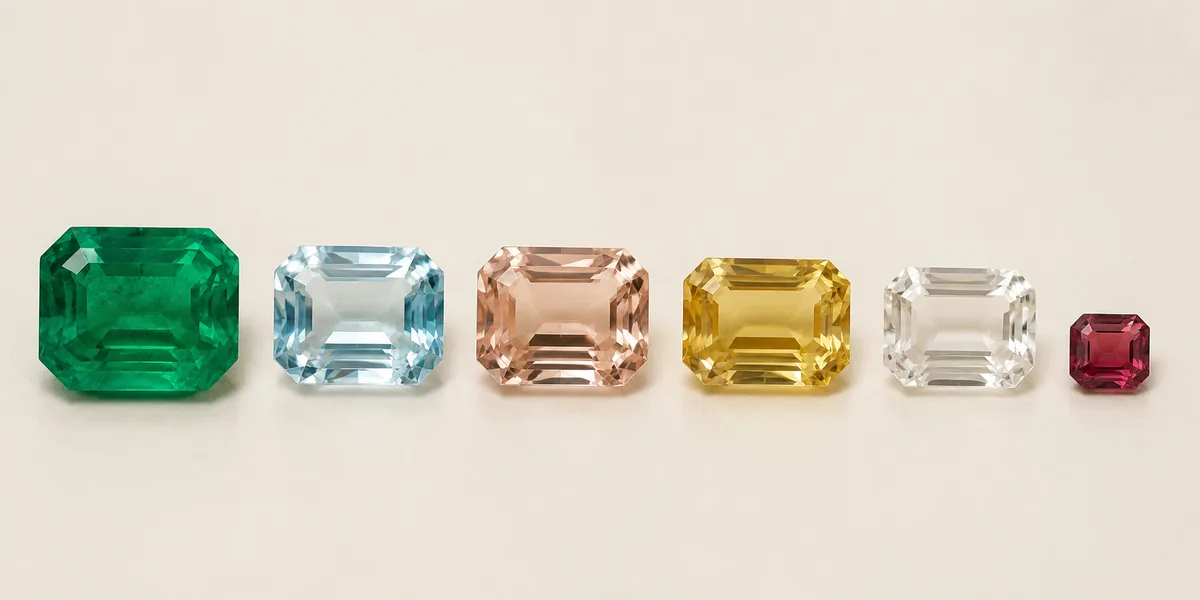
The chart below is a terminology map. It does not replace gemological testing, and color boundaries may be described differently by sellers, laboratories and markets.
| Common name | Typical appearance | What the name does not prove | Buyer priority |
|---|---|---|---|
| Emerald | Green to bluish green | Natural origin, geographic origin or absence of clarity enhancement | Ask about fracture filling, durability and a report for important purchases. |
| Aquamarine | Blue to greenish blue | Whether color is natural or modified by heat | Compare color in neutral lighting and request treatment disclosure. |
| Morganite | Pink, peach or pinkish orange | Treatment history or color stability under every condition | Ask about heat treatment, setting protection and return terms. |
| Heliodor / yellow beryl | Yellow to golden or yellow-green | A universally agreed boundary between trade terms | Get the mineral identity and treatment statement in writing. |
| Goshenite | Colorless | That a transparent colorless stone is beryl | Do not identify it by appearance alone; request testing for a consequential purchase. |
| Red beryl | Red to purplish red | Authenticity, origin or rarity-based value | Because the material is rare, prioritize an independent laboratory report. |
Where beryl names become less certain
Emerald versus green beryl
Not every green beryl is automatically described as emerald. Color depth and saturation matter in trade usage, while laboratory identification also considers the stone’s gemological properties. A seller’s green color label should not be treated as proof of emerald identity.
Aquamarine, green beryl and yellow beryl
Blue, greenish-blue, green and yellow beryl can form a visual continuum. Lighting, white balance and editing may move a stone across an apparent color boundary, so compare neutral images and rely on documentation rather than a single listing photo.
Special blue labels
Very dark blue beryl may be marketed with specialized names such as Maxixe. Some color in this group can be light-sensitive, making precise identity and stability disclosure more important than the attractiveness of the label.
Crystal Beryl Guide: Understanding Green Beryl Gemstones vs. Emerald
When exploring the beryl family, many collectors encounter beautiful green beryl gemstones and wonder how they differ from traditional emeralds. Both belong to crystal beryl, but gem naming depends on color, trace-element evidence, and accepted laboratory or trade criteria—not color alone.
Quick comparison: green beryl gemstones vs. emerald
| Key feature | Green beryl gemstones | Emerald |
|---|---|---|
| Typical color | Pale mint, soft seafoam, or lightly saturated green. | Green to bluish green with the color quality accepted for the emerald variety. |
| Color causes | Iron can contribute to green color in beryl. | Chromium and/or vanadium are commonly associated with emerald color; naming standards can vary by laboratory and market. |
| Clarity | Fine material may appear relatively transparent, but clarity varies by stone. | Inclusions and fissures are common; the traditional term jardin describes a garden-like included appearance. |
| Price context | Often more accessible than fine emerald, although cut, size, treatment, clarity, and documentation still affect price. | Fine emerald can command high prices, but value varies widely with color, clarity, treatment, origin evidence, and size. |
Meaning and everyday styling
In crystal-healing and chakra traditions, pale green beryl is associated with the heart, compassion, emotional renewal, and calm. These are cultural or folkloric beliefs, not scientific or medical facts.
Crystal beryl ranks about 7.5–8 on the Mohs scale, so it resists scratching reasonably well, but fractures, inclusions, treatments, and exposed settings still affect everyday-wear suitability. Pale stones can also show grime or a darkened setting through the gem, so regular gentle cleaning and a well-finished setting help preserve their appearance.
For skin-conscious jewelry, ask for documented implant-grade titanium—such as ASTM F136 or ASTM F67—or verified sterling silver rather than relying on an unqualified “hypoallergenic” claim. Titanium is highly corrosion resistant; sterling silver can tarnish and may not suit every wearer, so confirm the full alloy and any plating with the seller.
Treatments, durability and buying checks
Beryl has a Mohs hardness of about 7.5–8, which describes scratch resistance—not resistance to every impact, fracture or cleaning method. Emerald commonly requires extra caution because fractures and clarity enhancement may affect care. Any beryl with significant inclusions, uncertain treatment or an exposed setting deserves conservative handling.
Ask what is being identified
Request the mineral or variety name in writing. Do not let a color adjective, origin story or branded label substitute for identity.
Request full disclosure
Ask specifically about heat, fracture filling, dye, coating, irradiation or other treatment instead of relying on the word “natural.”
Match proof to the purchase
For rare, high-value or origin-dependent material, use an independent laboratory report and confirm that it matches the stone offered.
Inspect the setting and fractures
Check whether edges are exposed, inclusions reach the surface, and the seller gives care instructions appropriate to the actual stone and treatment.
For general cleaning decisions, see hardness versus toughness, natural versus treated gemstones, and how to clean crystal jewelry.
Published GemVerity guides
Explore beryl varieties in depth
Only completed guides are linked. The other family names above remain terminology entries until their dedicated pages pass review.
Frequently asked questions
Is emerald a type of beryl?
Yes. Emerald is the green to bluish-green gem variety of the beryl mineral species. Green appearance alone, however, is not enough to prove that a stone should be identified or valued as emerald.
Are aquamarine and morganite beryl?
Yes. Aquamarine is the blue to greenish-blue variety, while morganite covers pink to peach beryl. Both names describe members of the same mineral species.
Can beryl be identified by color?
No. Color helps narrow possibilities but cannot establish identity, treatment, origin or value. Transparent stones can overlap in appearance, especially in photographs.
Which beryl varieties may be treated?
Treatment depends on the variety. Aquamarine and morganite may be heated to adjust color, while emerald is often discussed in connection with fracture filling. Ask for a treatment statement specific to the stone.
Is beryl suitable for everyday jewelry?
Many beryls can work well in jewelry, but suitability depends on fractures, inclusions, treatment, cut and setting protection. Mohs hardness alone does not guarantee resistance to impact or aggressive cleaning.
What is the rarest well-known beryl variety?
Red beryl is exceptionally rare in the gem market. That rarity also raises the importance of independent identification and cautious evaluation of origin or value claims.
Sources and editorial boundary
Mineralogical context was checked against the GIA Gem Project: Beryl, GIA research on blue-to-yellow beryl color characteristics, and GemVerity’s reviewed aquamarine, morganite and emerald research records. This page is educational and cannot identify an individual stone from a photograph.
Reviewed and updated August 27, 2026.
Start with the evidence, not the label
Use the family map to understand terminology, then open a completed guide or ask for documentation that matches the specific stone.
Explore Aquamarine Explore Morganite Return to the Stone Library