Gemstone comparison
Spinel vs Ruby: How to Compare Them
Disclosure: This researched comparison is educational. GemVerity did not personally test the stones discussed, and this page contains no paid product recommendation.
Last updated:
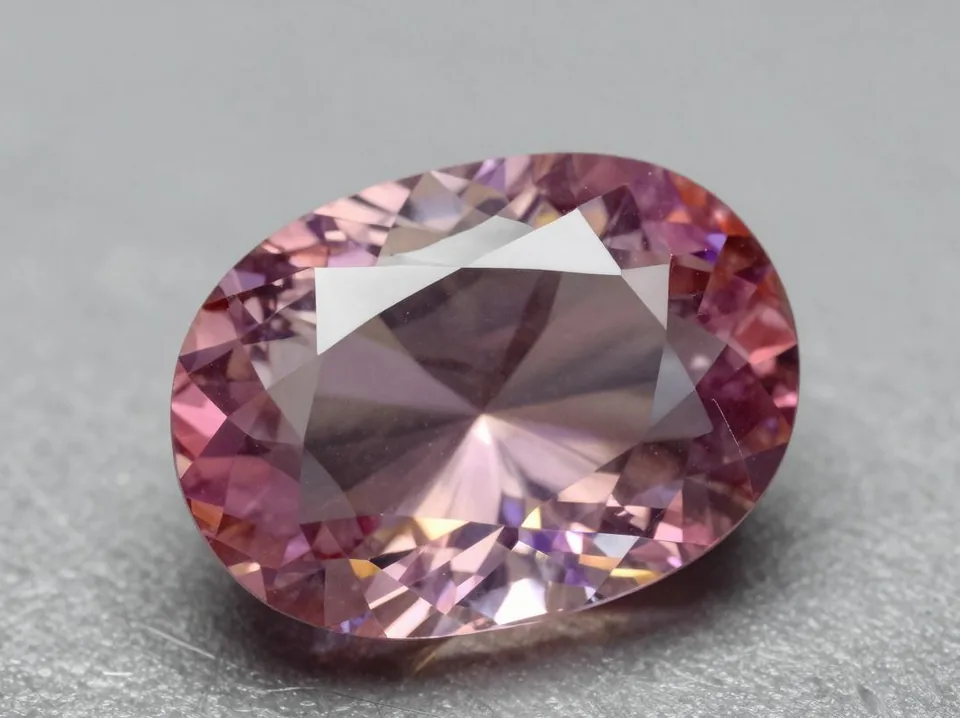
1. Scientific differences between spinel and ruby
Ruby is the red variety of corundum, aluminum oxide with formula Al₂O₃. Chromium commonly produces its red color. Ruby has Mohs hardness 9 and a refractive index around 1.76–1.77. Spinel is a different mineral, commonly magnesium aluminum oxide with formula MgAl₂O₄. Gem spinel has Mohs hardness about 8 and a refractive index near 1.718.
Ruby is doubly refractive, although anomalous effects and aggregate material can complicate observations. Spinel is normally singly refractive. A trained gemologist can combine refractive index, polarization, spectroscopy, microscopy, fluorescence, and inclusion evidence to separate them. A single visual clue is not a definitive test.
| Property | Red spinel | Ruby |
|---|---|---|
| Mineral identity | Spinel | Red corundum |
| Typical formula | MgAl₂O₄ | Al₂O₃ |
| Mohs hardness | About 8 | 9 |
| Refractive index | About 1.718 | About 1.76–1.77 |
| Optical character | Normally singly refractive | Doubly refractive |
| Common color cause | Chromium for many reds; other elements affect other colors | Chromium commonly produces red |
| Market treatment context | Many stones are untreated, but treatment and synthetics exist | Heating is common; filling, diffusion, synthetics, and composites also occur |
Historically, some celebrated red spinels were classified as rubies before modern mineralogy separated the species. That history explains the confusion, but it does not make spinel an imitation ruby. Explore the dedicated spinel identity and care guide for more context.
2. Identification and treatment questions
Red spinel and ruby can overlap in hue, saturation, transparency, and geographic source. Spinel may look bright and lively because it is singly refractive, while ruby can show pleochroism and characteristic inclusion patterns. However, lighting, cut, camera processing, synthetic growth, and treatment can imitate or obscure these clues. Do not rely on bubbles, fluorescence, a magnet, or a phone photograph as a final identification.
Ruby treatment disclosure deserves particular attention. Conventional heating is widespread. Some rubies may be fracture-filled with glass, diffusion-treated, assembled, or synthetic. These categories can differ substantially in durability, care, and market value. Spinel is often sold as untreated, but heated material, synthetic spinel, and other substitutes exist. “Natural,” “unheated,” and origin claims should be supported in writing when they materially affect price.
For a consequential purchase, ask an independent laboratory to identify species, natural or laboratory-grown origin, detectable treatment, and—when feasible and relevant—geographic origin. A seller’s color grade or trade name is not equivalent to a laboratory conclusion. Avoid destructive scratch, acid, or heat tests.
3. Which is the better buy?
Neither mineral is automatically the better purchase. Ruby may suit a buyer who values the traditional ruby name, July birthstone association, exceptional hardness, or established collector market. Spinel may suit someone who wants a distinct natural gem, a broad red-to-pink palette, strong brilliance, and potentially more size or clarity within a given budget. Fine spinel is not necessarily inexpensive, and fine ruby can vary enormously in price.
Judge each stone by color distribution, tone, saturation, transparency, cut, inclusions, size, treatment, documentation, and setting quality. A vivid stone that goes black in ordinary light may be less appealing than a slightly lighter, livelier one. Windowing, extinction, chips, surface-reaching fractures, and poor symmetry can matter more than a promotional grade.
- Choose ruby if: the species, tradition, and hardness are central to the purchase and documentation supports the claims.
- Choose spinel if: you prefer its particular color and brilliance and want the gem recognized on its own terms.
- Skip either stone if: the seller will not clarify identity, treatment, return terms, or whether the gem is laboratory-grown.
- For daily rings: inspect prongs and exposed corners regularly; hardness does not prevent chipping or setting failure.
4. Style, history, and symbolic meaning
Both gems work in rings, earrings, pendants, and bracelets. Red stones contrast strongly with white metals and look warmer in yellow or rose gold. A bezel or halo can protect edges; prongs admit more light but leave more of the girdle exposed. The best design depends on the stone’s shape, inclusions, intended wear, and the wearer’s tolerance for maintenance.
Ruby has long-standing associations with passion, status, vitality, and protection. Spinel is often linked with renewal, energy, hope, or resilience, partly through modern gemstone storytelling and its historical rediscovery. These are cultural and personal meanings, not scientifically verified health or emotional effects. Ruby is widely recognized as a July birthstone; spinel is also included on some modern August birthstone lists. Traditions vary, so symbolism should be presented as context rather than a guarantee.
If the red gem is part of a mixed green matrix, it may instead be ruby in zoisite, an aggregate material with different handling considerations. See the ruby in zoisite guide rather than applying faceted-ruby assumptions to it.
5. Durability and care
Ruby’s Mohs hardness of 9 gives it greater scratch resistance than spinel at about 8. Both can be practical jewelry stones, but Mohs hardness is not a complete measure of toughness, fracture risk, treatment stability, or mounting security. Inclusions, cavities, filling, repairs, thin girdles, and sharp corners can change how a particular gem should be worn and cleaned.
For a known, untreated or conventionally heated stone in sound condition, lukewarm water, mild soap, and a soft brush are generally conservative choices. Rinse carefully and dry with a lint-free cloth. Do not assume steam or ultrasonic cleaning is safe: filled, fractured, assembled, coated, or unidentified stones may require different care. Ask a qualified jeweler to inspect valuable or damaged pieces. Store red gems separately from softer jewelry and avoid impacts, sudden temperature changes, bleach, and abrasive cleaners. The site’s care guides provide broader handling principles.
Decision checklist
- Decide whether mineral identity or simply a preferred red color matters most.
- Compare stones in neutral daylight and ordinary indoor light.
- Request written identity, natural or laboratory-grown status, and known treatment.
- Inspect cut, inclusions, chips, setting security, and return terms.
- Obtain independent documentation when price or rarity claims are significant.
Frequently asked questions
Is spinel a type of ruby?
No. Spinel and ruby are different minerals. Ruby is red corundum with formula Al₂O₃, while common gem spinel is magnesium aluminum oxide with formula MgAl₂O₄.
Can you tell spinel from ruby by eye?
Not reliably in every case. Color, brilliance, inclusions, and fluorescence may provide clues, but gemological measurements and microscopy are stronger evidence than visual inspection alone.
Which is more durable, spinel or ruby?
Ruby is more scratch resistant at Mohs 9, compared with about 8 for spinel. Both can work well in jewelry, but either can chip or be damaged depending on inclusions, treatment, cut, setting, and impact.
Is untreated spinel always cheaper than ruby?
No. Price depends on color, size, clarity, cut, origin, treatment, documentation, rarity, and demand. Exceptional spinel can be costly, while commercial-quality ruby spans a wide range.
Compare the evidence, not just the name
A beautiful, documented spinel can be a better choice than a poorly disclosed ruby, and the reverse can also be true. Evaluate the individual gem.