Stone library / Organic gemstone
Amber
Amber is fossilized plant resin, not a mineral crystal. Before buying, separate natural amber from pressed amber, younger copal, and plastic or resin imitations; then ask about treatment, construction, and return terms.
1. Identity and definition
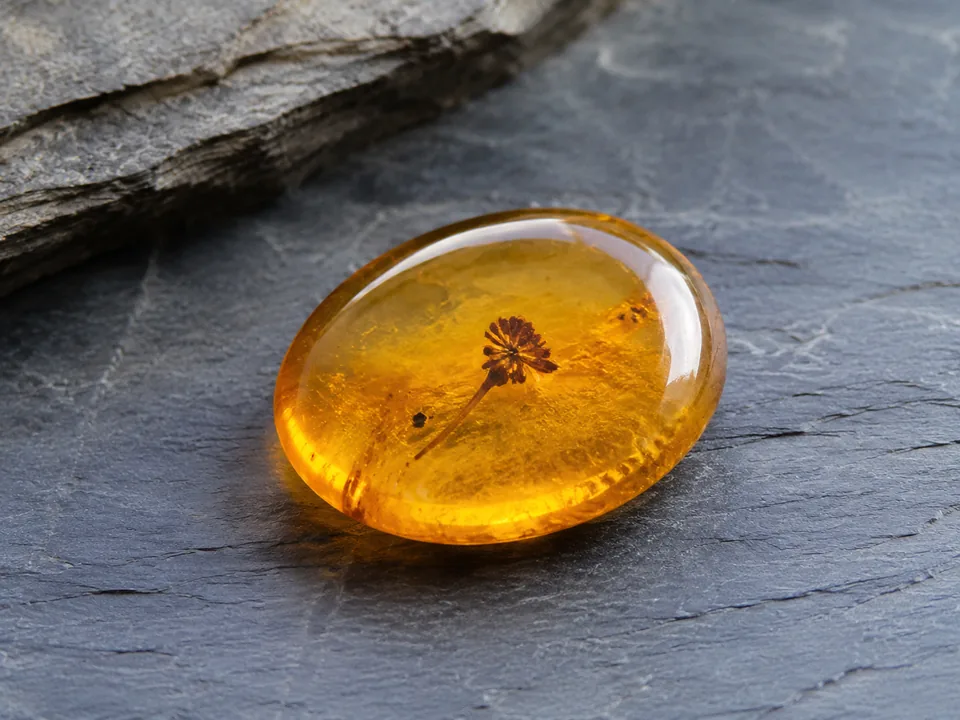
Amber is fossilized plant resin and an organic gemstone, not a mineral crystal. Geological age, resin type, locality, and inclusions can all matter when describing a specimen.
2. Composition and color
Colors range from pale yellow and honey to orange, red, brown, and sometimes blue. Bubbles, plant fragments, insects, and other inclusions can occur. Dramatic inclusions need careful examination because imitations are common.
3. Sources and geological setting
Baltic amber is widely known, while the Dominican Republic is known for blue amber and Myanmar for distinctive older amber. Amber occurs in sedimentary deposits associated with ancient resin-bearing forests.
4. Treatment and natural status
Heating, clarification, dyeing, pressing, copal substitution, and plastic imitations occur. Pressed amber and natural amber should be named separately, and insect inclusions deserve specialist assessment.
5. Cutting and jewelry use
Low hardness and light weight make amber suitable for beads, pendants, carvings, and protected earrings. It scratches easily, so avoid rough settings and contact with harder stones.
6. Meaning and emotional context
Amber is used in many cultures as a symbol of warmth, memory, sunlight, and heritage. Traditional medicinal or calming claims are not evidence that amber treats pain, sleep, or illness.
7. Market context and value
Price depends on color, clarity, inclusion, locality, size, treatment, age claims, and whether the piece is natural or pressed. Dramatic inclusions should be checked before paying a premium.
8. Astrology, folklore, and care
Sun, protection, child, and prosperity symbolism varies across cultures. Amber is soft, around 2 to 2.5, and sensitive to heat, alcohol, perfume, and solvents. Avoid sunlight and hot water; wipe with a soft damp cloth.
Practical buying and care answers
How to buy amber without confusing the material
Natural amber, pressed amber, copal, and plastic or resin imitations are different materials or constructions. Pressed amber is made from smaller amber pieces fused together; it should be named as such. Copal is younger resin and should not be represented as amber. Ask the seller to state the material, any heating, clarification, dyeing, pressing, or added inclusions in writing.
Amber care: what to avoid
Amber is soft, roughly Mohs 2 to 2.5. Keep it away from impact, heat, perfume, alcohol, solvents, and abrasive cleaning. Wipe with a soft damp cloth, dry it, and store it separately from harder jewelry. Do not use ultrasonic or steam cleaning unless a qualified jeweler has confirmed the exact construction.
Questions to ask before paying more
Ask whether the item is solid natural amber, pressed amber, copal, or an imitation; whether it has been heated, clarified, dyed, or altered; and whether any inclusion has been independently examined. Compare condition, clarity, color, size, documentation, and return terms, not a dramatic story or weight alone.
Frequently asked questions
What is amber jewelry made of?
Amber jewelry may be cut from natural fossilized plant resin, made from pressed amber fragments, or sold as copal, plastic, or another imitation. The listing should identify the material and disclose treatments instead of using “amber” as a catch-all label.
Is pressed amber real amber?
Pressed amber uses amber fragments fused together. It should be disclosed separately from a piece cut from one natural amber mass.
Can amber get wet?
A brief wipe with a soft damp cloth is generally the conservative option. Avoid prolonged soaking, hot water, detergents, alcohol, perfume, and solvents.
How can I tell amber from copal or plastic?
A photo or home test cannot reliably prove the material. For a valuable piece, request written disclosure and seek qualified gemological assessment.
Use this guide as a starting point
For a costly or disputed stone, ask for species, treatment, and origin information in writing. An independent laboratory report is stronger evidence than a marketing phrase.
Return to the stone librarySources: GIA Gem Encyclopedia and the GemVerity editorial method. Last reviewed: 2026-08-09. This is an educational guide, not a gemological identification report.