Stone library / market-name guide
Blue Needle Quartz
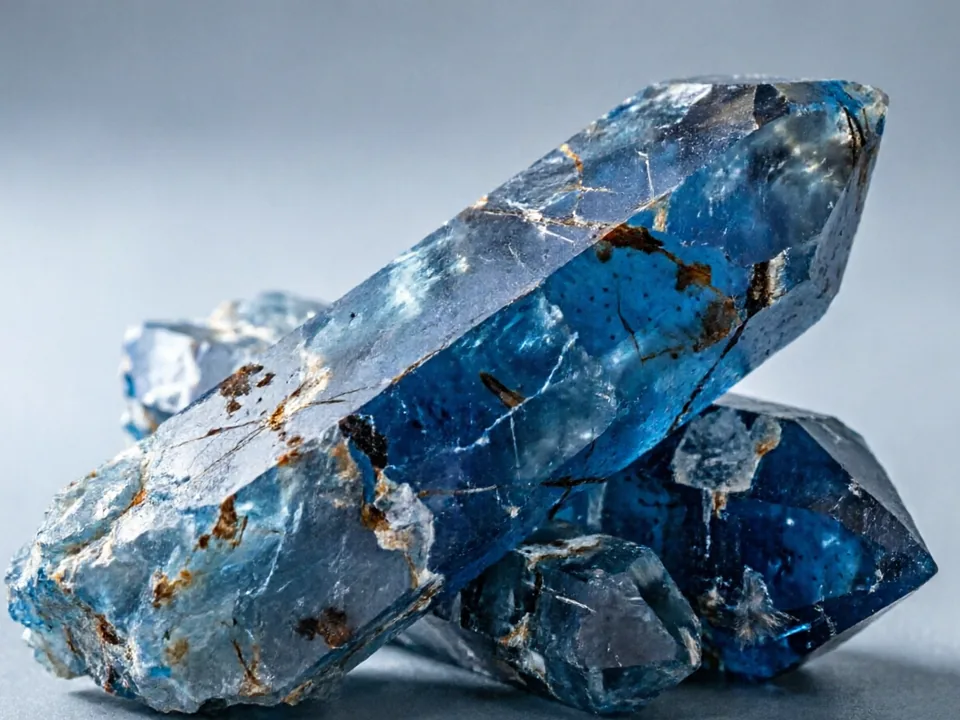
Blue Needle Quartz is a commercial name used for blue, needle-like-looking material sold as quartz. The name alone does not establish mineral species, inclusion identity, origin, treatment status, or value. This guide explains the practical checks to make before buying or wearing a piece.
Quick answer
Treat Blue Needle Quartz as a market label until a seller or laboratory identifies the base material and any inclusions. If it is confirmed to be quartz, quartz has a Mohs hardness of about 7; that does not prove every blue needle material is quartz or make a fractured, treated, or assembled piece suitable for every use.
Buying boundary: ask for the exact material name, any identification report, treatment disclosure, dimensions, weight, condition notes, and return terms in writing.
What does the name mean?
“Blue Needle Quartz” describes appearance, not a standardized mineral species. Sellers may use similar labels for different blue-toned or needle-like-looking features inside a transparent or translucent host. A trade name can be useful for browsing, but it is not evidence of composition or origin.
Start with the quartz family overview for verified quartz context. For another included-quartz market category, compare the rutilated quartz guide; do not assume the visible needles in the two materials are the same mineral.
How to verify a piece
A product photograph, color, seller nickname, or home test cannot establish species, origin, or treatment. A qualified gemologist or laboratory may use magnification, refractive index, specific gravity, microscopy, spectroscopy, and other tests when the identity or price makes verification important.
For an expensive, disputed, or investment-style purchase, request a report from a recognized gemological laboratory and confirm that the report applies to the exact item offered. A generic certificate, stock photo, or broad locality story is not a substitute for item-specific documentation.
Natural status, treatments, and imitations
Ask whether the host material has been dyed, coated, filled, heated, irradiated, stabilized, assembled, or represented by a synthetic or glass imitation. Those possibilities are not accusations about a particular seller; they are standard questions when a commercial name does not identify the material precisely.
Keep the answer with the invoice. If the seller cannot identify the material or treatment, price the piece as an uncertain decorative item rather than as a documented gemstone. The natural versus treated stones guide explains why disclosure changes both care and value.
Jewelry wear and cleaning
Care should follow the confirmed material and construction, not the name. If a piece is confirmed quartz and has no unstable treatment or vulnerable setting, mild soapy water and a soft cloth are conservative first choices. Do not use ultrasonic cleaning, steam, strong chemicals, or sudden temperature changes when the identity, inclusions, fractures, coatings, glue, or assembly are unknown.
For rings and bracelets, inspect exposed edges and settings more often than you would for a pendant or display specimen. Read hardness and toughness for jewelry before treating a hardness number as a promise of impact resistance.
What affects price?
Value depends first on what the item actually is. After identity, buyers usually compare appearance, clarity, size, cut or polish, condition, treatment disclosure, documented origin where relevant, and return protection. A dramatic label, spiritual claim, or scarcity statement does not by itself support a premium.
Choose the piece for its documented identity, appearance, and suitability for the intended use. Cultural or personal meaning can be important to a buyer, but it is separate from mineralogical evidence and is not a guarantee of health, luck, wealth, or other outcomes.
Blue Needle Quartz questions
Is Blue Needle Quartz a recognized mineral species?
No. It is a market label. The specific host material and any inclusions need separate identification.
Is Blue Needle Quartz the same as rutilated quartz?
Not necessarily. Both names can describe needle-like-looking material, but visible needles alone do not establish the same inclusion mineral. Compare the rutilated quartz guide and request identification for the exact item.
Can Blue Needle Quartz be worn every day?
That depends on the confirmed material, treatment, fractures, and setting. A confirmed quartz piece may be suitable for many designs, but an unknown, coated, assembled, or fractured piece needs more conservative handling.
What should I ask a seller before buying?
Ask for the exact material name, treatment disclosure, item-specific photos, dimensions, weight, condition notes, report details when available, cleaning limits, and return policy.
Continue the material check
Use the trade-name category when a product label is more specific than the evidence behind it, then return to the confirmed material guide for care.
Return to the stone librarySources: GIA Gem Encyclopedia for general gemological context and the GemVerity editorial method. Last reviewed: 2026-08-19. This is an educational guide, not a gemological identification report.