Stone library / Jade & ornamental stones / Comparison
Jadeite vs Nephrite: How to Tell the Difference
Jadeite and nephrite are two different materials that share one English word. Jadeite is a pyroxene mineral; nephrite is an aggregate of amphibole fibers. They differ in composition, color range, toughness, treatment practice, and the evidence a buyer should request.
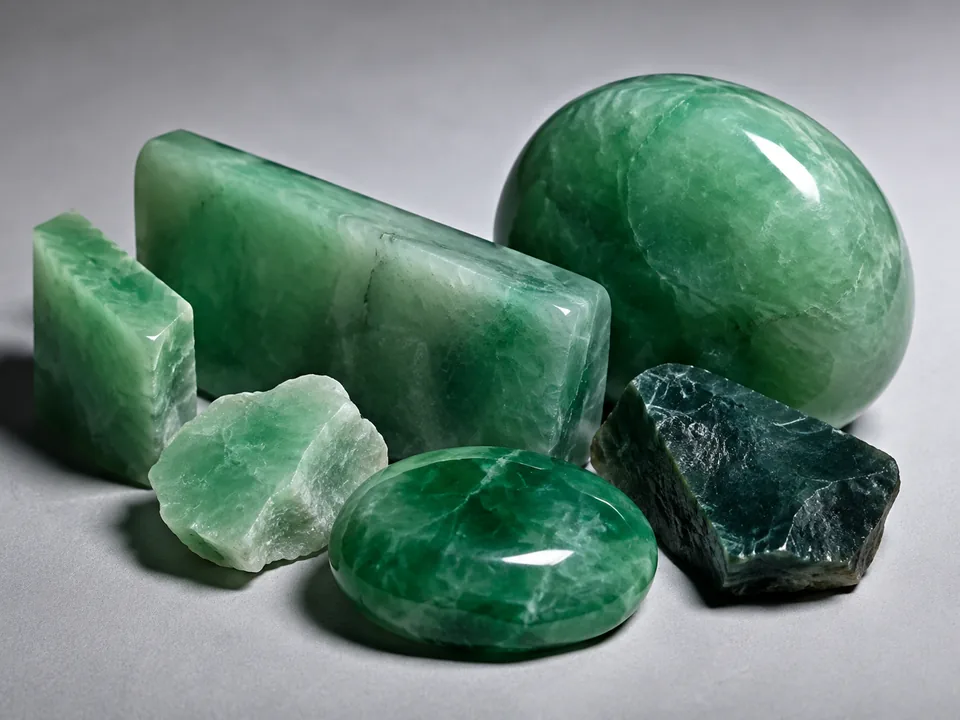
Jadeite and nephrite at a glance
| Property | Jadeite | Nephrite |
|---|---|---|
| Mineral nature | Pyroxene mineral, jadeite composition | Amphibole aggregate, actinolite-tremolite series |
| Typical hardness | About Mohs 6.5 to 7 | About Mohs 6 to 6.5 |
| Toughness | Good, but can chip at thin carved edges | Exceptionally tough because of interlocking fibers |
| Common colors | Green, lavender, white, gray, black, brown | White, green, yellow-green, brown, black |
| Typical treatments | Bleaching, polymer impregnation, dyeing | Waxing, occasional dyeing |
| Price drivers | Color saturation, transparency, even texture, treatment status | Color, luster, evenness, carving quality, size |
Why the two materials are confused
Both have been carved and polished for centuries, both take a smooth luster, and both are sold under the single word jade. Traders historically used regional and color-based names rather than laboratory species names. That history survives in listings that say only jade, green jade, or jade stone.
The confusion extends beyond these two minerals. Serpentine, aventurine quartz, glass, and treated stone have all appeared under jade-like names. A smooth green surface is not a species test, and a certificate for a different piece does not identify the stone in front of you.
Treatments and trade grading terms
Jadeite is commonly bleached and polymer-impregnated to improve appearance, and it may also be dyed. Sellers sometimes use the letters A, B, and C for untreated, impregnated, and dyed material. Those letters are trade conventions, not a universal laboratory grade, and they do not cover every treatment or every country's usage.
Nephrite is often waxed to improve surface luster. Waxing is a surface finish; it is not the same claim as color treatment. For either material, the useful question is what was done to this specific piece, and whether that appears on the invoice.
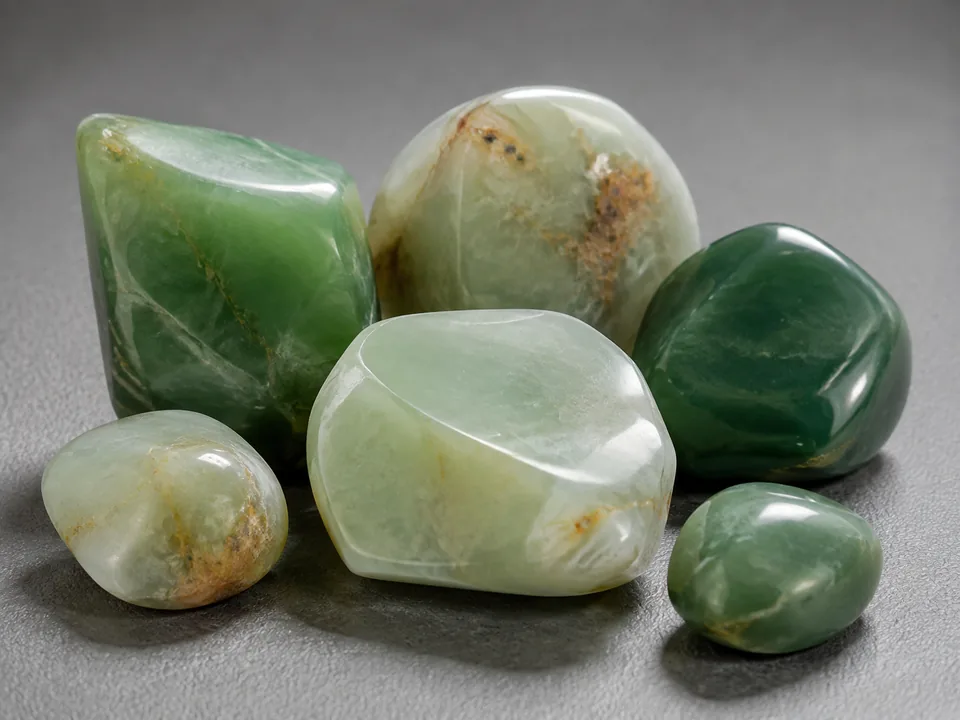
Hardness, toughness, and realistic wear
Hardness measures scratch resistance; toughness measures resistance to breakage. Nephrite is usually the tougher of the two even though it is softer, because its interlocking fibrous structure distributes impact. Jadeite can be very durable in a solid piece but may chip at thin carved edges, sharp corners, or existing fractures.
Rings and bangles take the most impact. Pendants, earrings, and protected cabochons take less. A treatment changes the answer: impregnated or dyed jadeite may be more sensitive to heat, solvents, and ultrasonic cleaning than untreated material.
How to spot fakes and mislabels
- A color name is not a species name. Green jade, Xiuyan jade, and jade-like stone may be serpentine or another material.
- Uniform color at a low price deserves a question. Fine jadeite color is scarce; dye and coating are common alternatives.
- Look at the edges and drilled holes. Dye concentration, coating wear, and filled fractures often show there first.
- A photo cannot prove treatment. Ask for the treatment wording and, for expensive pieces, a recognized laboratory report.
- A mine story is not provenance. Reputable origin claims need documentation proportionate to the premium.
Care boundary
Wipe with a soft, slightly damp cloth and dry promptly. Avoid soaking, steam, ultrasonic cleaning, acids, chlorine, perfume, and household cleaners when the piece is treated, dyed, waxed, or unidentified. Store jade separately from harder stones and inspect carved edges and bangles for chips.
Stop cleaning if color transfers, the surface becomes chalky or tacky, or a filling looks cloudy. Read hardness and toughness before assuming that one jade care rule fits both materials.
Buying questions
- Is this jadeite or nephrite, and what is the basis for that identification?
- Is the piece untreated, bleached, impregnated, dyed, waxed, or coated?
- Are there fractures, filled areas, repairs, or thin carved edges?
- Can I see the front, back, edges, and drilled holes in neutral light?
- Does the invoice state the material and treatment?
- Is the price supported by a report for the exact piece?
- What cleaning method is approved for this piece?
Cultural meaning
Jade has long-standing cultural associations with protection, status, and longevity in several regions. Those meanings belong to cultural history and personal symbolism, not to a scientific or financial guarantee.
Specific sources
- GIA: Jade — jadeite and nephrite identity.
- GIA: Jadeite — material and treatment context.
- GIA: Nephrite — composition and toughness context.
- CIBJO industry standards and resources — disclosure framework.
Last reviewed: 2026-11-05. This guide cannot authenticate jadeite, nephrite, or a treatment from a photograph.