Stone library / Quartz & Silica / Quartz Varieties with Inclusions
Red Rutile Quartz
Everything you need to know about red rutile quartz: what it is, where it comes from, treatments, jewelry care, cultural meaning, and what affects value.
Note: ⚠️ Commercial name. = quartz with red/brown rutile or hematite needles.
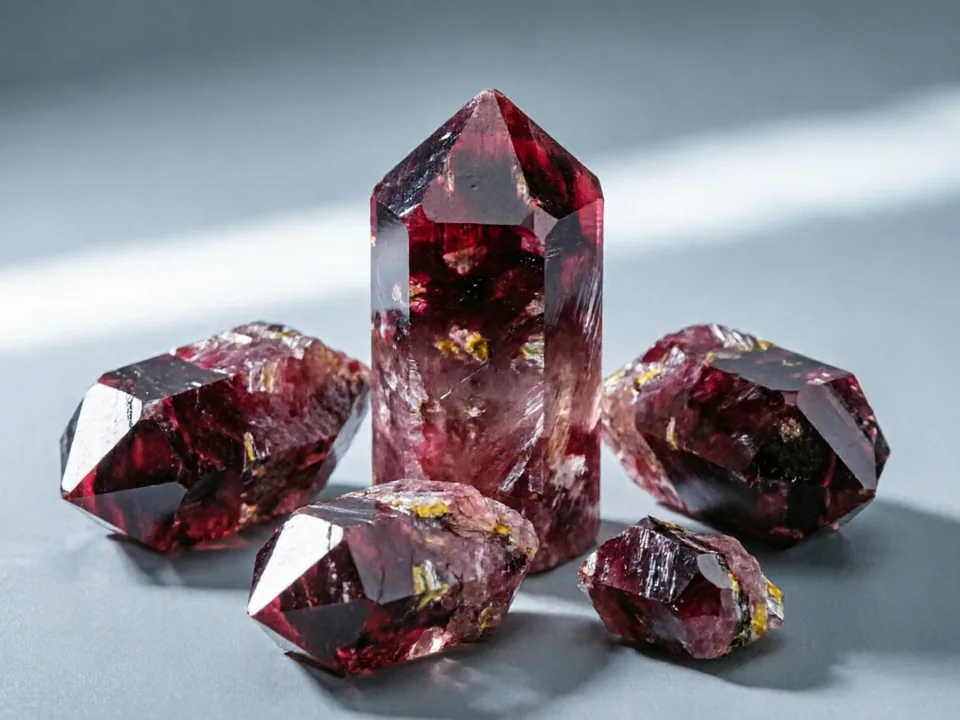
What is red rutile quartz?
Red Rutile Quartz has chemical formula SiO₂ with iron-rich rutile or hematite inclusions. Mohs hardness: 7. Density: approximately 2.65–2.8 g/cm³. Refractive index: 1.54–1.55.
What gives it its color?
Iron-rich rutile or hematite needle inclusions produce reddish-brown to copper-red needles in quartz.
Where does it come from?
Major sources include Brazil, China.
Treatments and how to spot them
Generally untreated. Red color comes from iron oxide in the inclusions.
Important: Visual clues such as inclusions, color patterns, or surface features can provide preliminary observations, but they cannot replace refractive index, specific gravity, microscopic examination, and laboratory testing for a definitive identification. Treat visual clues as starting points, not final answers.
Jewelry and care tips
With hardness 7, red rutile quartz can be used in various jewelry types. Clean with warm soapy water and a soft cloth. Avoid ultrasonic cleaners unless the stone is known to be fracture-free. Store separately from harder gemstones.
Note: Prolonged strong light or high heat may cause some color-sensitive or treated stones to fade. Brief daily wear does not usually cause immediate fading, but avoid leaving jewelry in direct sun for extended periods.
Cultural beliefs and symbolism
Red Rutile Quartz carries cultural meaning across many traditions — these are folkloric and cultural traditions, not scientifically verified properties. Its associations vary by culture, and its use in astrology, chakra, or feng shui contexts should be understood as cultural expression rather than factual claims.
What affects its value?
Price is determined by color saturation, clarity, cut quality, and size. Terms like commercial color names are market descriptions — they cannot by themselves prove origin or value. Before buying: ask the seller to confirm the material identity, treatment status, dimensions, and return policy in writing.
Use this guide as a starting point
For a costly or disputed stone, ask for species, treatment, and origin information in writing. An independent laboratory report is stronger evidence than a marketing phrase.
Return to Quartz & SilicaEditorial framework: the GemVerity editorial method. This is an educational guide, not a gemological identification report. Cultural beliefs described above are folkloric traditions, not scientific guarantees.