January birthstone care
Can Garnet Get Wet? Care Guide for Your January Birthstone
Yes, most untreated garnet jewelry can handle brief contact with clean, lukewarm water. For a sound stone in a setting that permits wet cleaning, use mild soap, a soft brush, a short rinse, and thorough drying. For elastic bracelets or glued pieces, check the maker's care instructions first. Remove garnet jewelry before swimming, bathing, cleaning, or entering saltwater because chemicals, residue, heat, and prolonged moisture may affect the setting or an unknown treatment.
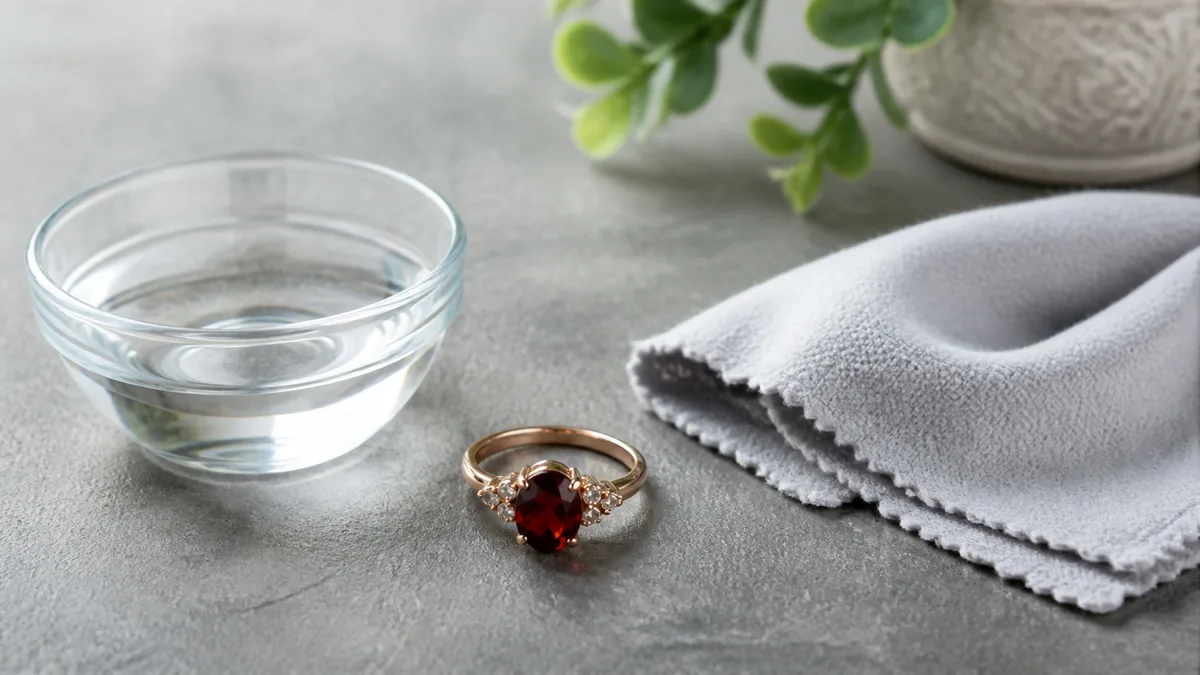
The short answer
Garnet is a group of silicate minerals rather than one single gemstone variety. The GIA garnet care guide gives a Mohs hardness range of 6.5 to 7.5, depending on the variety. Hardness describes scratch resistance, not complete resistance to heat, chemicals, impact, or every cleaning method.
A quick splash or careful wash is usually not a problem for a sound, untreated garnet in a secure setting. The safer question is whether the entire piece—including prongs, solder, plating, glue, stringing material, and any treatment—can tolerate the exposure. If the stone is fracture-filled, coated, assembled, badly included, damaged, antique, or of uncertain identity, ask the seller or a qualified jeweler before wet cleaning.
Garnet water exposure guide
| Situation | Practical guidance | Why |
|---|---|---|
| Brief rinsing | Usually acceptable | Use clean, lukewarm water and dry the whole piece promptly. |
| Rain or an accidental splash | Low concern | Blot dry and check moisture around the setting or drill holes. |
| Handwashing | Occasional contact is usually manageable | Repeated soap exposure can leave film, and a loose ring can slip off. |
| Shower or bath | Remove first | Heat, soap, shampoo, and prolonged moisture can leave residue or affect some settings. |
| Chlorinated pool or hot tub | Keep dry | Pool chemicals and heat may attack alloys, solder, plating, or other components. |
| Ocean or saltwater | Keep dry | Salt residue can collect around settings, while sand can abrade metal and softer components. |
One accidental exposure rarely means the garnet is ruined. Rinse away chlorine or salt with clean lukewarm water only if the piece is known to tolerate wet cleaning, dry it thoroughly, and have it inspected if the setting changes color, feels loose, or traps residue.
How to clean garnet jewelry at home
- Inspect first. Look for loose prongs, chips, surface-reaching fractures, peeling coatings, stretched cord, or movement in the setting. Do not wet-clean a damaged piece.
- Check the construction. Use the following water-cleaning steps only when the stone, setting, and any attached materials permit them. For elastic, glued, plated, or unidentified pieces, start with a dry soft cloth and ask the maker about wet cleaning.
- Prepare a mild solution. Add a small amount of fragrance-free dish soap to a bowl of lukewarm—not hot—water.
- Clean briefly. Dip the piece or clean it with a damp, ultra-soft brush. Avoid a long soak, especially when construction or treatment is unknown.
- Brush gently. Work around the back of the stone and setting without forcing bristles beneath prongs.
- Rinse safely. Use a separate bowl of clean water or plug the sink drain before a gentle rinse.
- Dry completely. Pat with a lint-free cloth and allow hidden areas to air-dry before storage.
Do not use bleach, ammonia, abrasive powders, toothpaste, or stiff brushes. A commercial cleaner is appropriate only when its label specifically permits garnet and the metal, treatment, and construction of your piece.
What about ultrasonic and steam cleaners?
Do not steam-clean garnet. GIA does not recommend steam cleaning. Its guidance says ultrasonic cleaning is usually suitable for garnets without fractures, but that does not establish whether your particular setting, glue, cord, or other stones can withstand it. Fracture-filled garnets need warm soapy water rather than machine cleaning.
For home care, use brief hand cleaning when the whole piece permits it. Leave any decision about ultrasonic cleaning to a jeweler who has inspected the stone and setting.
For valuable or inherited jewelry, ask a qualified jeweler to identify treatments and inspect the setting before machine cleaning.
The setting matters as much as the stone
Sterling silver can tarnish, plated finishes can wear, and chlorine may affect certain alloys or soldered areas. Gold and titanium settings also vary by alloy, finish, construction, and attached components; no metal choice makes every piece maintenance-free.
After cleaning, check that prongs remain even and the stone does not click or rotate. Store garnet separately from harder gems that could scratch it. See the garnet mineral group for identity context and gemstone jewelry cleaning steps for broader cleaning boundaries.
Can you wear garnet every day?
Many garnets are durable enough for regular jewelry wear, especially in earrings and pendants. Rings and bracelets receive more impact and abrasion, so remove them for weightlifting, gardening, sports, repairs, and other hands-on work. Mohs hardness does not prevent chipping at exposed edges or damage from a hard blow.
Frequently asked questions
Can garnet fade in sunlight?
Ordinary daylight is not generally treated as a major fading risk for common garnets. Still, avoid prolonged high heat and do not use sunlight exposure as a cleaning method, particularly when a stone's identity or treatment is uncertain.
Can I sleep or shower in garnet jewelry?
Remove it first. Sleeping can snag chains or stress prongs, while showers expose the piece to heat, soap, shampoo, and repeated moisture that can leave film or affect some components.
Is commercial jewelry cleaner safe for garnet?
Only use a product whose label permits both garnet and the setting metal. Avoid bleach, ammonia, abrasives, and cleaners intended for a different material. When treatment or construction is unknown, start with a dry soft cloth and ask the maker or a jeweler before using liquid cleaner.
What should I do after swimming with garnet jewelry?
Remove the piece, rinse it briefly with clean lukewarm water if its construction is known to tolerate wet cleaning, and dry it thoroughly. Seek a jeweler's inspection if the metal changes color, the stone moves, or residue remains around the setting.
Source and care limits
GIA: Garnet Care and Cleaning Guide supports the hardness range, gemstone cleaning advice, and fracture-filling precautions above. Our recommendations for bracelets, settings, and accidental water exposure are conservative whole-piece care guidance; they are not a test of your jewelry. Follow care instructions for the most vulnerable component.