Bracelet fit
Crystal Bracelet Size Guide: 6mm, 8mm, and 10mm Beads
Disclosure: This researched guide is educational. GemVerity did not personally test the bracelets discussed, and this page contains no paid product recommendation.
Last updated:
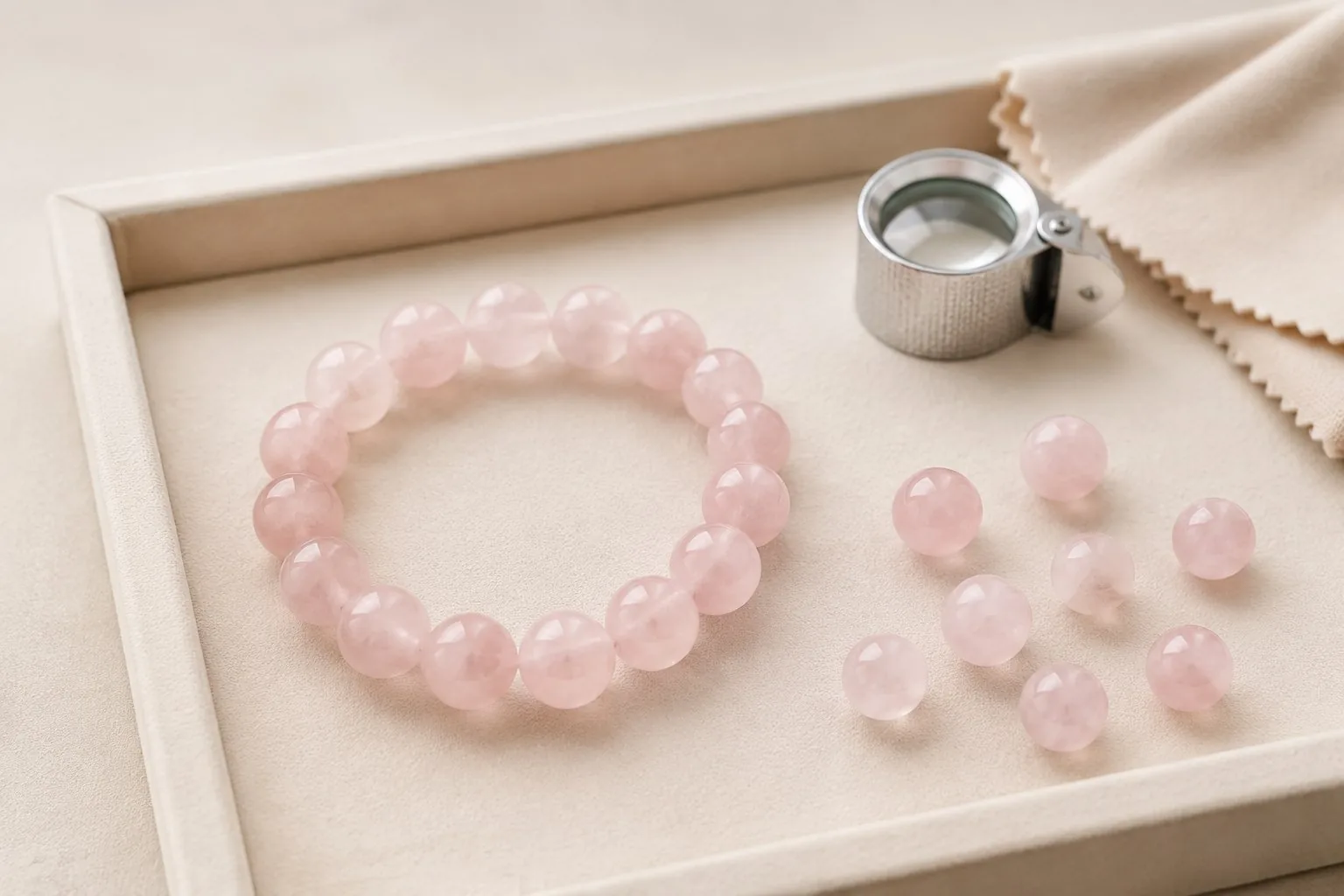
Step one: measure the wrist, not the old bracelet
Wrap a flexible tape measure around the wrist just below the wrist bone, where the bracelet will sit. Keep it snug but not tight. If you do not have a tape measure, wrap a strip of paper or a piece of string around the wrist, mark it, and measure the length against a ruler.
Measure again at the end of the day if you are unsure. Wrists can change slightly with temperature and activity. For a bracelet that must pass over the hand, also measure the widest part of the hand.
Wrist to bracelet length
| Wrist measurement | Snug elastic length | Comfortable elastic length | Clasped bracelet length |
|---|---|---|---|
| 14 cm | 14.5 cm | 15 to 15.5 cm | 15.5 to 16 cm |
| 15 cm | 15.5 cm | 16 to 16.5 cm | 16.5 to 17 cm |
| 16 cm | 16.5 cm | 17 to 17.5 cm | 17.5 to 18 cm |
| 17 cm | 17.5 cm | 18 to 18.5 cm | 18.5 to 19 cm |
| 18 cm | 18.5 cm | 19 to 19.5 cm | 19.5 to 20 cm |
| 19 cm | 19.5 cm | 20 to 20.5 cm | 20.5 to 21 cm |
These are starting points, not a universal standard. Bead size, string thickness, charm spacing, and the closure all affect the finished inner length.
How bead size changes the bracelet
A bracelet is roughly the bead diameter multiplied by the number of beads, plus the string and any gaps. Larger beads need fewer of them to reach the same circumference, so a 10 mm bracelet looks bolder and feels different from a 6 mm bracelet at the same length.
| Bead diameter | Approximate beads for a 17 cm inner length | Visual effect |
|---|---|---|
| 6 mm | About 27 to 28 beads | Fine, lighter, easier to stack |
| 8 mm | About 21 to 22 beads | Balanced everyday look |
| 10 mm | About 17 to 18 beads | Bold, heavier, more visual impact |
| 12 mm | About 14 to 15 beads | Statement piece; fit is less forgiving |
Bead counts vary with drilling, string thickness, and whether the bracelet includes spacers. Ask the seller for the finished inner circumference rather than relying on a count.
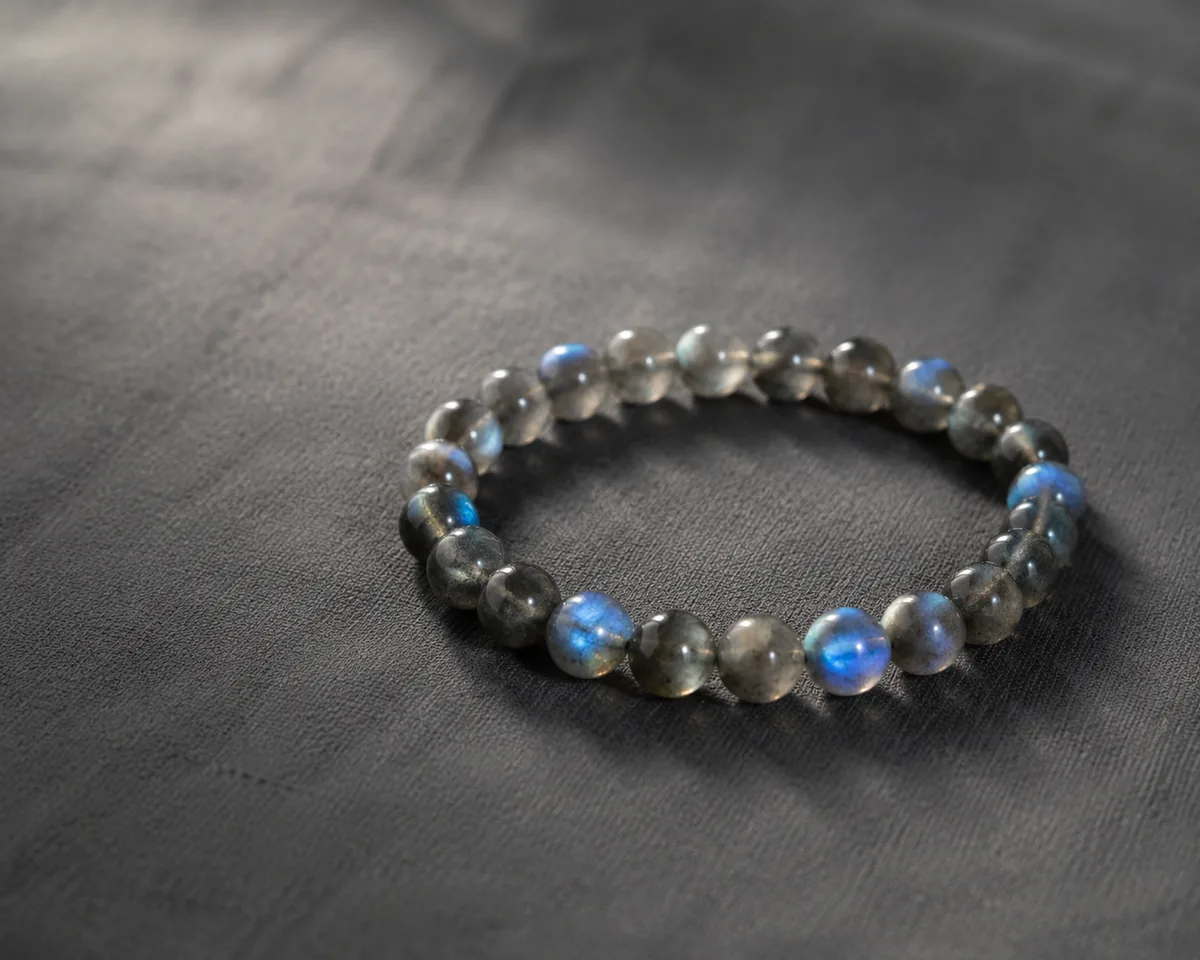
Elastic, clasped, and adjustable bracelets
- Elastic: needs enough stretch to pass over the hand without straining the cord. Add 0.5 to 1 cm over the snug wrist measurement.
- Clasped: usually needs about 1 to 1.5 cm over the wrist measurement so the clasp does not sit tight.
- Adjustable: check the minimum and maximum inner length, not only the maximum.
- Bangles: fit is about hand width and the opening, not wrist circumference.
Common fit mistakes
- Measuring over clothing or a watch.
- Choosing a length by bead count instead of finished circumference.
- Assuming every 8 mm bracelet fits the same wrist.
- Buying an elastic bracelet that is too tight to pass over the hand.
- Ignoring how heavy a 12 mm bead bracelet feels after an hour.
- Forgetting that water and heat can affect some elastic cords and stone treatments.
For care, read can crystal bracelets get wet and why a crystal bracelet breaks.
Sources and limits
- GIA Gem Encyclopedia — bead and material context.
- GemVerity crystal bracelet guide — materials, stringing, and care.
- Which wrist for a crystal bracelet — cultural framing, not a fit rule.
Last reviewed: 2026-11-05. Sizing tables are general guidance; confirm the seller's measured inner circumference before buying.