Stone library / Mineral specimen
Fluorite
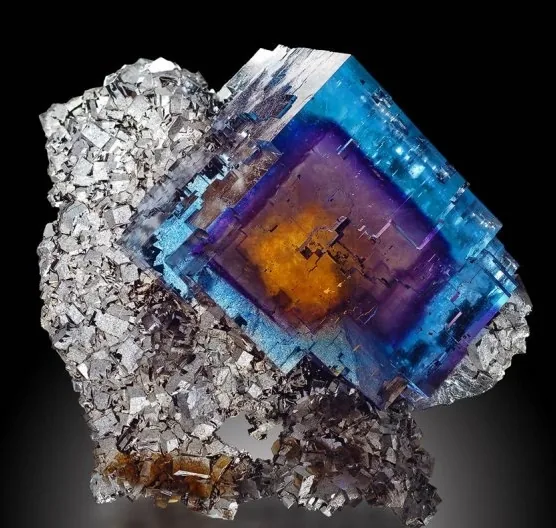
Fluorite is calcium fluoride (CaF2), valued for its color zoning and cubic crystals. With a Mohs hardness around 4, it scratches and chips more easily than common ring stones, so suitability for jewelry and conservative care are central buying questions.
1. Identity and definition
What is fluorite? Fluorite is the mineral form of calcium fluoride, written CaF2. It commonly forms cubic crystals and is valued as both a mineral specimen and a colorful ornamental material. It is not the same material as quartz or other silica gemstones.
2. Composition and color
Purple, green, blue, yellow, clear, and banded colors are common. Color can relate to defects, trace elements, and radiation history. Strong zoning and translucency often drive collector interest.
3. Sources and geological setting
Fluorite occurs in hydrothermal veins and carbonate-hosted deposits. Major sources include China, Mexico, South Africa, the United Kingdom, and the United States, often with quartz, calcite, barite, and sulfide minerals.
4. Treatment and natural status
Dyeing, coatings, fracture filling, and other market treatments can occur. Fluorescence is a useful observation but does not prove origin, quality, or lack of treatment.
5. Cutting and jewelry use
With Mohs hardness around 4, fluorite scratches and chips easily. It is better suited to protected pendants, carefully used beads, carvings, and specimens than to exposed everyday rings. Keep the cut simple and avoid thin edges.
6. Meaning and emotional context
Fluorite is often called a stone of clarity or study in crystal traditions. That language can express personal meaning, but color and fluorescence do not prove improved memory, reduced anxiety, or treatment of illness.
7. Market context and value
Common material can be affordable, while clean crystals, vivid zoning, unusual forms, and well-documented specimens can command more. Compare transparency, damage, size, locality, and treatment rather than price per gram alone.
8. Astrology, folklore, and care
There is no mineralogical basis for assigning a fixed star sign, element, chakra, or luck effect. Avoid impact, acids, prolonged soaking, strong heat, and long direct sun exposure. Clean gently with a soft damp cloth and store separately from harder stones.
Practical buying and care answers
Is fluorite suitable for everyday jewelry?
Fluorite is generally better suited to protected pendants, earrings, careful bead use, carvings, and specimens than an exposed everyday ring. A ring receives repeated abrasion and impact; thin edges, cleavage, fractures, and an open setting add risk. Choose a protective setting if fluorite will be worn.
How to clean fluorite safely
Use a soft damp cloth and dry the piece afterwards. Avoid ultrasonic and steam cleaning, abrasive cleaners, strong chemicals, prolonged soaking, high heat, and impact. Store fluorite separately from harder stones that can scratch it.
What to ask when buying fluorite
Ask whether color, coatings, dye, filling, repairs, or assembly are present, and request dimensions, condition images, and return terms. Fluorescence, vivid color, or a claimed locality can be interesting observations, but none alone proves origin, quality, or untreated status.
Related reading: opal and care guides.
Frequently asked questions
What is fluorite?
Fluorite is calcium fluoride, CaF2, a mineral known for cubic crystals, color zoning, and occasional fluorescence. Its identity should not be inferred from color or glow alone.
What is fluorite hardness?
Fluorite is about Mohs 4, so it can scratch and chip more readily than quartz, corundum, or diamond jewelry.
Can fluorite be worn in a ring?
It can be worn in a protective setting, but it is a higher-care choice for a ring than a harder material.
Can fluorite go in water?
For a finished piece, use a brief soft damp-cloth clean and dry it. Avoid prolonged soaking and unknown cleaning methods.
Use this guide as a starting point
For a costly or disputed stone, ask for species, treatment, and origin information in writing. An independent laboratory report is stronger evidence than a marketing phrase.
Return to the stone librarySources: GIA Gem Encyclopedia and the GemVerity editorial method. Last reviewed: 2026-08-08. This is an educational guide, not a gemological identification report.