Stone library / Tourmaline / Identification & buying guide
Paraíba Tourmaline: Identification, Origin, Treatments and Value
Paraíba tourmaline is a trade and variety name for qualifying copper-bearing tourmaline with vivid blue-to-green color—not proof that a stone came from Brazil. Copper chemistry, treatment and geographic origin cannot be confirmed from color or photographs alone. For a valuable purchase, use an independent gemological report and written seller disclosures.
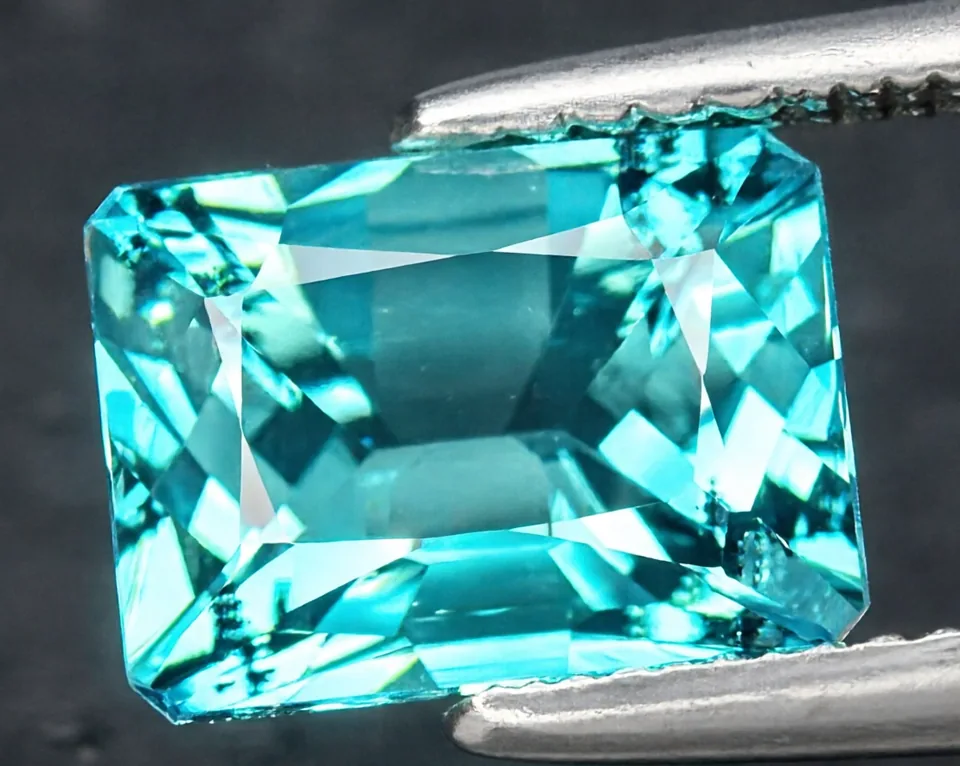
What is Paraíba tourmaline?
Paraíba tourmaline is a colored-stone variety within the tourmaline mineral group. Harmonized laboratory nomenclature uses the name for qualifying blue, violet-blue, bluish-green, greenish-blue or green tourmaline whose color is mainly associated with copper and manganese, regardless of geographic origin. The name began with material from Brazil's Paraíba region, but today the variety name and the origin opinion are separate statements.
That distinction matters: a Mozambique or Nigeria stone may qualify as Paraíba tourmaline, while a blue tourmaline without the required copper-related chemistry should not receive the name merely because it looks similar.
Short answer
“Paraíba” describes a qualifying copper-bearing tourmaline variety; “Brazil,” “Mozambique” or “Nigeria” describes a separate geographic-origin opinion. Ask for both statements independently.
Why do copper and manganese matter?
Copper is the key chromophore associated with the electric blue, turquoise and green appearance for which the variety is known. Manganese can modify the hue, and the final face-up color also depends on concentration, crystal chemistry, cutting, lighting and any treatment. “Neon” is useful market language for an unusually bright appearance, but it is not a home test or a laboratory result.
Do not treat a simplified chemical formula with “+ Cu” as the identity of every stone. Tourmaline is a chemically complex mineral group, and trace-element analysis—not a visual label—is what supports the copper-bearing designation.
Paraíba vs ordinary blue or green tourmaline
| Question | Paraíba tourmaline | Other blue/green tourmaline |
|---|---|---|
| What supports the name? | Qualifying color plus copper-related chemistry under laboratory nomenclature | Color may be associated with other trace elements; blue material is often sold under names such as indicolite |
| Can color prove identity? | No | No |
| Can a phone photo prove origin or treatment? | No | No |
| Best evidence for a costly stone | Independent report, measurements and written treatment/origin disclosures | Independent report when identity or value is material to the purchase |
Refractive index, specific gravity and microscopy can help establish that a stone is tourmaline and reveal inclusions or filling, but routine observations alone do not reliably prove the Paraíba variety or a mine location. Avoid scratch, magnet, UV, “glow” or color-comparison tests presented as definitive authentication.
Brazil, Mozambique and Nigeria: what origin changes
Copper-bearing tourmaline is best known from Brazil, Mozambique and Nigeria. Fine stones occur in more than one source, and color ranges overlap. Origin should therefore be treated as a laboratory opinion based on the stone's measurable features and comparison with reference material—not as something a buyer can determine from saturation, inclusion style or seller photographs.
| Origin named on a report | Useful context | What not to assume |
|---|---|---|
| Brazil | The historic namesake source; reports may further discuss Paraíba or Rio Grande do Norte material when evidence supports it. | Brazilian origin is not proven by “neon” color, small size or a seller story. |
| Mozambique | An important source of copper-bearing tourmaline across blue-to-green and other color ranges. | Larger size or high clarity does not prove Mozambique. |
| Nigeria | A recognized source of copper-bearing tourmaline that may qualify for the Paraíba variety name. | Violet or green modifiers do not establish Nigeria. |
Advanced laboratories may combine microscopy, spectroscopy and quantitative trace-element data with reference databases. Even then, read the exact wording: geographic origin is an expert opinion for the submitted stone, not a guarantee that every visually similar stone shares that source.
Common treatments and disclosure limits
Heat treatment
Heat may be used to reduce unwanted color modifiers and improve a blue-to-green appearance. In some copper-bearing tourmaline, laboratories may not be able to determine conclusively whether heating occurred. A report can therefore identify the material while using cautious language about heat. “No evidence of heat” and “unheated” should not be treated as interchangeable unless the issuing laboratory explicitly supports that conclusion.
Clarity enhancement
Surface-reaching fractures may be filled with oil, resin or another substance to make them less visible. Filling can affect durability, cleaning choices and value. Ask whether clarity enhancement was detected and, when the laboratory provides it, the stated degree of enhancement.
What a seller should disclose
- Whether the stone is natural tourmaline, synthetic material, an imitation or an assembled product.
- Known or detected heat and clarity enhancement.
- Whether “Paraíba” is supported by a named laboratory report.
- Whether a geographic-origin claim appears on that report or is only seller attribution.
What should a Paraíba tourmaline lab report say?
For a high-value loose stone or important jewel, prefer a recent report from an independent laboratory with a verifiable report number. The document should correspond to the stone's weight, dimensions, shape and identifying photograph or plot.
- Identification: natural tourmaline and the variety/trade name used by the laboratory.
- Color: the laboratory's observed color description.
- Treatment comments: detected filling and the laboratory's conclusion or limitation regarding heat.
- Geographic origin: only when the laboratory offers and can support an origin opinion.
- Matching details: weight, measurements and image should agree with the stone being sold.
A report is not an appraisal and does not set a retail price. It also does not replace checking the seller's return period, condition description and written disclosure.
What affects Paraíba tourmaline value?
There is no reliable universal price-per-carat table. Asking prices vary with quality, documentation, seller, market and timing. Compare stones only after separating the following factors:
- Face-up color: hue, tone, saturation and brightness usually lead the visual assessment. A vivid stone can still be too dark, gray, uneven or poorly lit in a listing.
- Transparency and clarity: inclusions are common, but fractures, cloudiness and filling can affect beauty and durability. Eye-clean material is not automatically untreated.
- Cut quality: look for balanced proportions, even color, symmetry and limited windowing rather than weight retention alone.
- Carat weight: size matters only in combination with color, transparency and cut; a larger dull or heavily windowed stone is not automatically more desirable.
- Treatment disclosure: detected filling and uncertainty about heat should be reflected in comparison and documentation.
- Identity and origin evidence: a credible report reduces uncertainty. A supported origin opinion may affect market preference, but origin does not rescue weak color or poor cutting.
- Condition: chips, abrasions, repaired settings and vulnerable fractures matter, especially in rings.
For an expensive purchase, obtain an independent appraisal for value and insurance; a gemological identification report serves a different purpose.
Paraíba tourmaline buying checklist
- Request the independent laboratory report before paying, then verify its number with the issuing laboratory.
- Match the report's weight, dimensions, shape and image to the actual stone.
- Confirm whether “Paraíba” is a laboratory conclusion or only listing language.
- Separate variety identification from geographic origin; do not pay an origin premium for an unsupported story.
- Ask for heat and clarity-enhancement disclosures in writing.
- View neutral daylight and indoor videos, not only highly saturated studio images.
- Check for windowing, extinction, uneven color, chips and surface-reaching fractures.
- Read the return and inspection policy before purchase.
- For a major purchase, arrange independent inspection during the return window.
Jewelry suitability and safe cleaning
Tourmaline has Mohs hardness around 7–7.5, which describes scratch resistance—not resistance to impact, thermal shock or damage around fractures. Earrings and pendants are lower-risk choices. A ring can be practical when the stone is securely set and protected from knocks, but heavily included or filled stones need extra caution.
- Clean with lukewarm water, mild soap and a soft brush or cloth.
- Rinse gently and dry thoroughly.
- Avoid steam and ultrasonic cleaning when the stone is included, fractured, filled or of uncertain treatment status.
- Avoid sudden temperature changes, harsh chemicals and hard impacts.
- Store separately from harder gems and inspect prongs periodically.
See the broader jewelry cleaning guide, hardness and toughness guide and natural vs treated gemstone guide.
Frequently asked questions
Does Paraíba tourmaline have to come from Brazil?
No. Under harmonized laboratory nomenclature, qualifying copper-bearing tourmaline may receive the Paraíba variety name regardless of geographic origin. Brazil, Mozambique or Nigeria is a separate origin opinion.
Can I identify Paraíba tourmaline by its neon color?
No. Bright blue-green color can justify further testing, but it cannot prove copper chemistry, natural origin, treatment or geographic source.
Is all Paraíba tourmaline heated?
No blanket conclusion is safe. Heat is used in the trade, but treatment may be difficult to detect in some stones. Read the exact laboratory comment and seller disclosure.
Is Paraíba tourmaline suitable for an engagement ring?
It can be, but setting design, inclusions, fractures, filling and wear habits matter. Choose a protective setting, avoid hard knocks and have valuable jewelry inspected by a qualified jeweler.
Does a laboratory report tell me what the stone is worth?
No. A gemological report addresses identity and may address treatment or origin. An appraisal is a separate opinion of value.
Buy the evidence, not the adjective
For a costly stone, require a report that supports the Paraíba name, read treatment comments carefully and treat geographic origin as a separate conclusion. Strong documentation makes meaningful comparisons possible.
Explore the Tourmaline librarySources and editorial boundary
Primary references: Laboratory Manual Harmonisation Committee; GIA: Paraíba Tourmaline; GIA: Geographic Origin Determination of Paraíba Tourmaline; SSEF: Paraíba Tourmaline; and GIA: Tourmaline Care and Cleaning.
Reviewed August 28, 2026. This educational guide is not a gemological identification report, appraisal or investment recommendation. See the GemVerity editorial method.