Crystal library / garnet varieties
Spessartine garnet: the orange stone sold as "Fanta Stone."
Fanta Stone is a commercial nickname, not a formal mineral species. It usually points to vivid orange spessartine garnet, sometimes marketed as mandarin garnet.
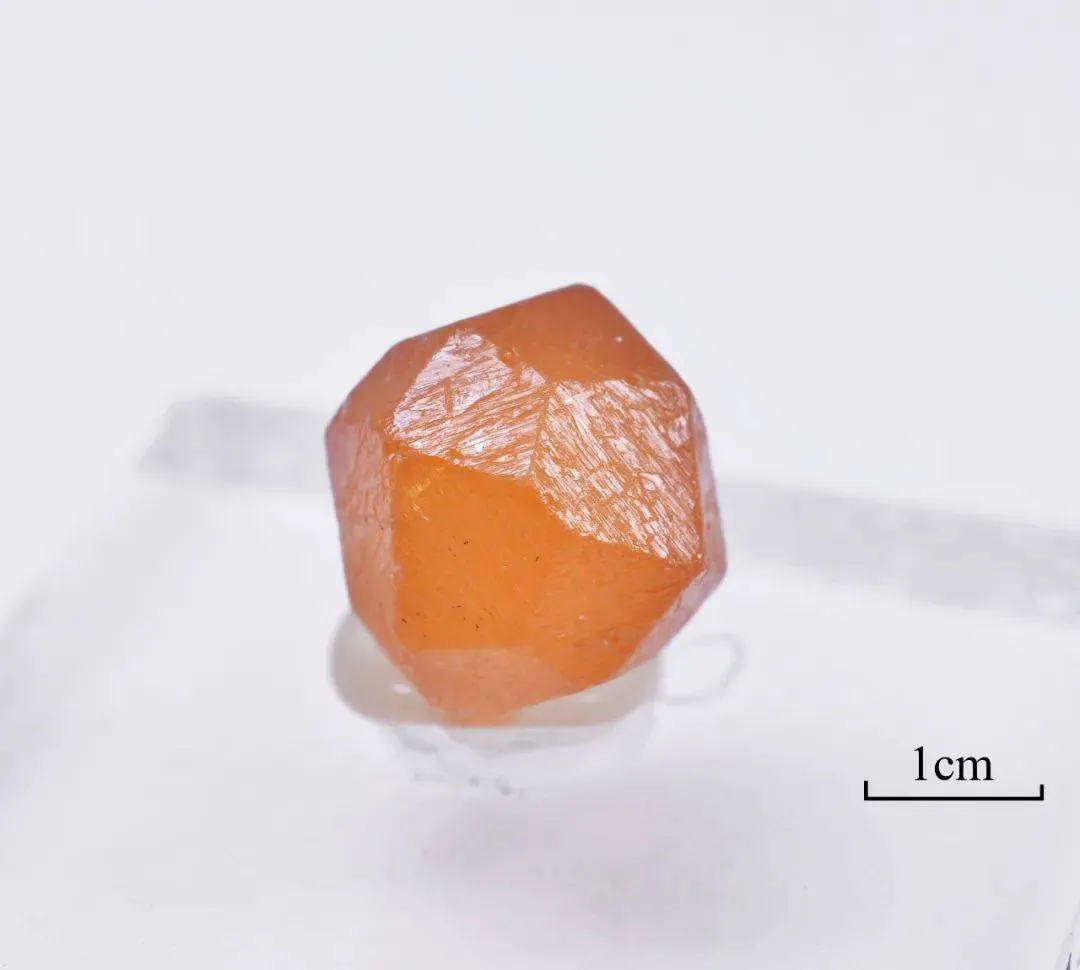
What spessartine is
Spessartine is a distinct species within the garnet group, with the ideal chemical formula Mn₃Al₂(SiO₄)₃. It is primarily an aluminum silicate where manganese occupies the primary position, which is what gives it its signature vivid orange to orange-red appearance. While pure spessartine is relatively rare, it typically forms in solid solution with almandine (the iron-rich garnet). As the iron content increases, the color shifts from bright "Fanta" orange to darker, more reddish or brownish tones. "Mandarin garnet" is a commercial trade term generally reserved for the most vibrant, highly saturated orange material, originally discovered in Namibia. However, these are descriptive trade terms; the exact composition and species identification still require a reliable gemological laboratory report.
| Question | What to check | Why it matters |
|---|---|---|
| What is the material? | Spessartine, spessartine-rich garnet, or an unverified trade name | A bright orange name does not replace mineral identification. |
| Why is it orange? | Color, zoning, inclusions, and the seller's description | Color alone cannot prove composition or origin. |
| Was it treated? | Written treatment disclosure and return terms | Do not assume a stone is untreated because a listing says "natural." |
Spessartine vs. Hessonite Garnet
Buyers looking for an orange garnet often compare spessartine with hessonite (a variety of grossular garnet). While they can look similar to the naked eye, they differ in chemistry and internal characteristics. Spessartine gets its orange color from manganese and often displays a crisp, brilliant appearance if relatively free of inclusions. Hessonite, on the other hand, gets its warm, cinnamon-orange to brownish-orange color from trace iron and manganese, and it characteristically displays a swirling, "treacle-like" internal appearance (often called the "roiling effect"). For definitive identification between the two, a gemologist will check their refractive indices: spessartine typically ranges from 1.790 to 1.814, whereas hessonite is lower, usually around 1.740.
Wear and care
Garnet is often described around 7 to 7.5 on the Mohs hardness scale, but hardness is only one part of durability. A ring receives more impact than a pendant, and fractures or thin edges can raise the risk of damage.
- Clean with a soft cloth or mild soapy water when the setting and treatment permit it.
- Keep the stone away from hard impacts, abrasive powders, and sudden temperature changes.
- Ask a jeweler before using ultrasonic or steam cleaning on an included, fractured, or repaired stone.
- Store it separately from harder stones and inspect the setting before frequent wear.
Buying language without price promises
Color intensity, clarity, size, cut, origin documentation, and treatment history can all affect a seller's asking price. No single color grade guarantees value. Compare like with like, request a treatment statement, and use an independent report for a costly stone.
Editorial boundary
Orange color is often used in symbolism and marketing, but claims about luck, energy, chakra effects, health, or guaranteed financial outcomes are not mineral facts. This guide keeps those claims outside its evidence-based description.
Research note: species, treatment, and origin should be verified with a current gemological reference or qualified laboratory. See our method for the evidence boundary and the full crystal library for related guides.