Stone library / Garnet / Garnet Family
Tsavorite Garnet
A source-aware guide to tsavorite garnet identity, green color, treatment disclosure, jewelry durability, value factors, and practical care.
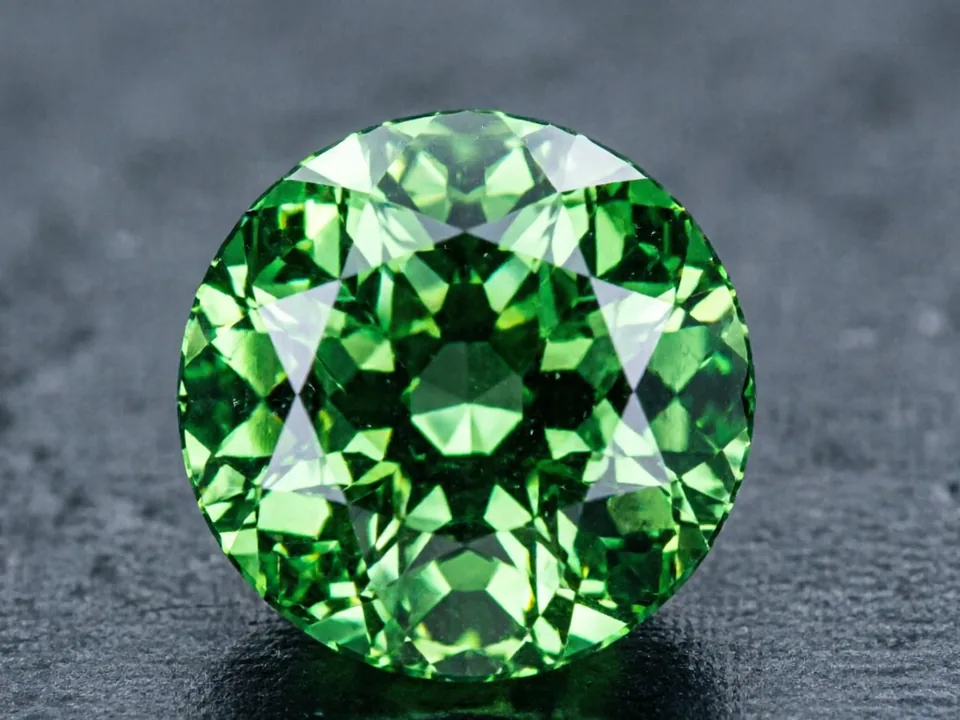
What tsavorite is
Tsavorite is the green gem variety of grossular garnet, a calcium aluminum silicate with formula Ca₃Al₂(SiO₄)₃. It belongs to the garnet group rather than the emerald or tourmaline families. Typical Mohs hardness is about 7–7.5. A green appearance alone cannot establish grossular identity or distinguish natural tsavorite from other green gems or glass.
Color, inclusions, and origin
Vanadium and chromium are associated with tsavorite’s green color. Tone may range from light to deep green, and inclusions are common. Attractive inclusions can support natural-origin interpretation, but photographs do not prove species or geographic source. Kenya and Tanzania are important commercial sources; a specific origin claim should be backed by reliable documentation.
Treatment status and disclosure
Tsavorite is typically marketed without routine heat treatment or oiling, which is one reason buyers value it. “Typically untreated” does not justify an absolute guarantee for every object. Ask whether the stone has been fracture-filled, coated, assembled, or otherwise enhanced, and request a report when treatment status materially affects the purchase.
Jewelry durability
Grossular garnet has no cleavage and useful hardness, so a well-set tsavorite can suit regular jewelry wear. It can still chip at exposed corners or along surface-reaching fractures. Rings benefit from protective prongs or bezels, adequate metal support, and removal during impact-heavy work. Inspect prongs and clean behind the stone so brilliance is not confused with permanent condition.
Cleaning and maintenance
Warm water, mild soap, and a soft brush are the safest routine method. Rinse and dry thoroughly. Avoid steam, sudden temperature changes, harsh chemicals, and ultrasonic cleaning when inclusions, fractures, treatment, or setting condition are uncertain. A jeweler should inspect valuable pieces before aggressive cleaning or repair.
Value and buying questions
Color quality, brightness, clarity, cut, size, durability, treatment status, workmanship, and documentation shape value. Larger clean stones can command strong premiums, but no fixed price can be inferred from color alone. Ask for dimensions, weight, treatment and origin statements, setting details, return terms, and an independent report for a significant stone.
Meaning and folklore boundaries
Green garnets are associated in modern folklore with vitality, growth, prosperity, or renewal. These are cultural and personal meanings, not scientific evidence that tsavorite improves health, causes career success, or creates wealth.
Continue the material check
Compare the garnet family guide, demantoid garnet, and spessartine garnet.
Sources: GIA’s garnet reference, GIA garnet care guidance, and the GemVerity editorial method. Last reviewed: 2026-08-29. This educational guide is not a gemological identification report.