Stone library / Serpentine jade
Xiuyan Jade
Understand what Xiuyan Jade usually means, why the trade name needs care, how it is carved, and how to avoid misleading treatment claims.
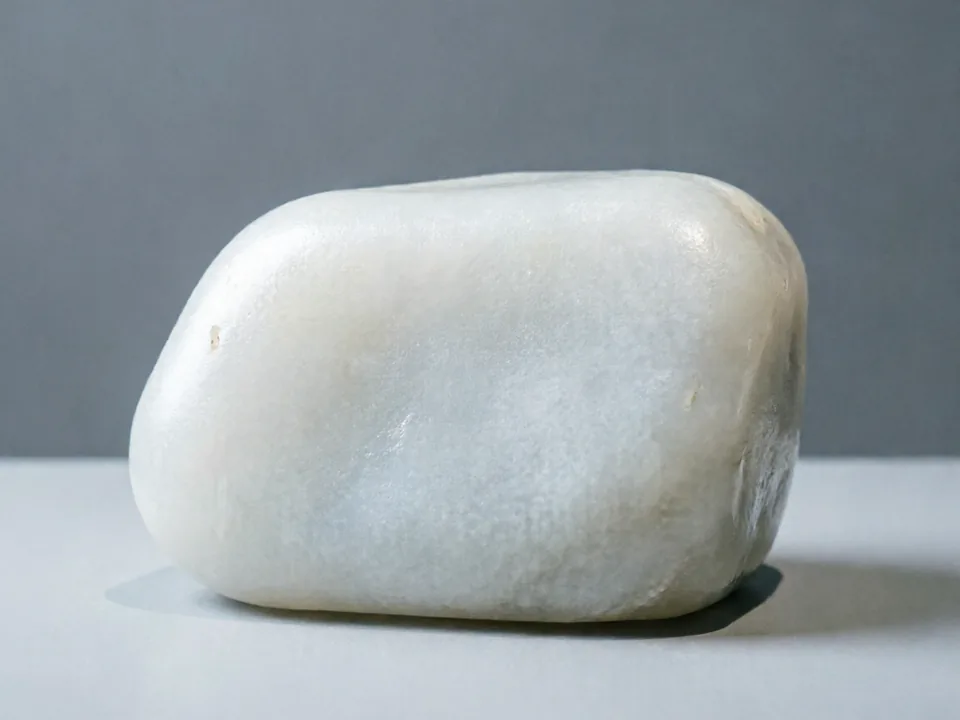
1. Identity and definition
Xiuyan Jade commonly refers to serpentine jade from Xiuyan County in Liaoning, China. The trade name is not interchangeable with jadeite or nephrite, so mineral identity should be stated clearly.
2. Composition and color
Serpentine-group minerals can show yellow-green, green, white, brown, and mottled colors. Texture, translucency, color distribution, fractures, and polish shape visual quality.
3. Sources and geological setting
Xiuyan County is the best-known source, with deposits in metamorphic and altered ultramafic environments. Serpentine can occur with talc, carbonate minerals, magnetite, and other alteration minerals.
4. Treatment and natural status
Dyeing, waxing, polymer filling, coatings, and composite materials may occur. Do not assume green material is untreated or that the word jade identifies jadeite or nephrite.
5. Cutting and jewelry use
Its relatively low hardness and workable texture make it popular for carvings, bangles, pendants, beads, seals, and decorative objects. Avoid thin edges and high-impact settings.
6. Meaning and emotional context
Chinese jade culture often connects green stone with continuity, blessing, dignity, and family gifting. Those traditions are cultural context, not evidence that the material improves health or fortune.
7. Market context and value
Price depends on color, translucency, texture, size, carving quality, treatment, and accurate mineral naming. Clear material disclosure often matters more than a broad jade label.
8. Astrology, folklore, and care
Five-element, longevity, protective, and prosperity associations belong to cultural tradition. Serpentine is softer than many common jewelry stones. Avoid hard impact, acids, high heat, and abrasive cleaners. Do not use water as a substitute for treatment disclosure.
Use this guide as a starting point
For a costly or disputed stone, ask for species, treatment, and origin information in writing. An independent laboratory report is stronger evidence than a marketing phrase.
Return to the stone libraryEducational guide only, not a gemological identification report. See our method and care guides.