Buying guide / consumer protection
Misleading Crystal Trade Names: 8 Labels to Verify Before Buying
A trade name is a commercial label, not a mineral identification. Names like Super Seven, Phoenix Stone, and Blue Lace Stone can sound specific while hiding that the underlying material varies from piece to piece. This guide explains how trade names work, why they can be misleading, and how to verify what you are actually buying.
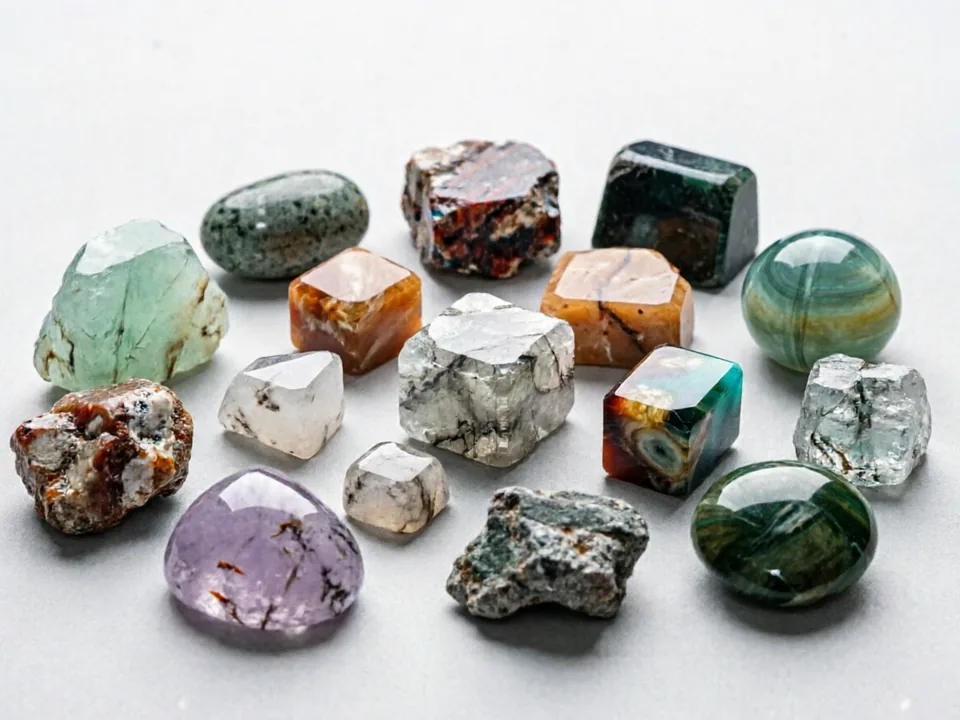
What a trade name actually is
A mineral species has a fixed scientific definition, such as quartz, beryl, or tourmaline. A trade name is a marketing label applied by sellers to make a material sound more appealing, rare, or mystical. The problem is that a single trade name can point to different minerals depending on who is selling it — or to no single mineral at all.
Trade names are not inherently fraud. Some, like Ruby-Zoisite, describe a real, identifiable two-mineral combination. The issue is that they shift the burden of verification onto the buyer. A trustworthy seller will always state the mineral or material behind the label.
The 8 labels we flag for verification
Across our stone library, we mark trade names that need sample-specific identification. These are the eight most common ones, grouped by how the label works.
Included-quartz labels
These names describe quartz with visible inclusions, but the inclusion itself may not be what the name implies.
| Label | What it usually is | What to verify |
|---|---|---|
| Blue Needle Quartz | Quartz with blue needle-like inclusions | Whether the inclusion is natural or a dyed/treated result |
| Super Seven Quartz | Quartz marketed as containing seven minerals | Whether all seven claimed minerals are actually present |
Unverified labels
These names are so loose that the underlying material genuinely varies from piece to piece.
| Label | What it usually is | What to verify |
|---|---|---|
| Phoenix Stone | A multicolor material whose mineral varies | The exact mineral, which changes by source |
| Rose Stone | Often rhodonite, but not always | Whether it is rhodonite or a different pink material |
Color and effect labels
These names describe an appearance or optical effect rather than a mineral, which invites substitution.
| Label | What it usually is | What to verify |
|---|---|---|
| Blue Lace Stone | A blue chalcedony-like material | Whether it is genuine blue chalcedony or a treated lookalike |
| Star Rose Quartz | Rose quartz showing asterism | Whether the star is natural or created by treatment |
| Ruby-Zoisite | Green zoisite with red ruby (a real aggregate) | Proportion of ruby and whether it is genuine |
| Purple Mica | Usually lepidolite, a soft lithium mica | Confirm it is lepidolite and not a dyed substitute |
Why trade names can mislead
Trade names create three specific risks for buyers:
- Mineral substitution. A label like "Rose Stone" can be applied to several different pink minerals, each with different durability and value.
- Treatment concealment. A vivid "Blue Needle Quartz" may be natural, or it may be dyed — the name alone does not tell you.
- Value inflation. A mystical-sounding name can justify a higher price for what is actually a common, inexpensive material.
How to verify before you buy
- Ask for the mineral name. A trustworthy seller will state the mineral or material behind the trade name. If they refuse or cannot answer, that is a red flag.
- Ask about treatment. Dyeing, heating, irradiation, coating, and assembly are all common. Request explicit disclosure.
- Ask for the source. "Phoenix Stone" from one location may be a different mineral than "Phoenix Stone" from another. Origin claims should be documented, not asserted.
- Compare against the price. If a trade name commands a premium over the ordinary mineral it describes, ask what exactly justifies it.
- When it matters, get it tested. For high-value purchases, a gemological report is the reliable way to confirm identity.
The bottom line
A trade name is a starting point for a question, not an answer. It tells you what a seller wants you to feel about the stone, not what the stone actually is. Before you pay a premium for a label, confirm the mineral, the treatment, and the source — and walk away from any seller who will not disclose them.
Frequently asked questions
What is a crystal trade name?
A trade name is a commercial label used by sellers to market a stone. It is not a mineral identification, and a single trade name can refer to different minerals depending on the seller.
Is a trade name the same as a mineral species?
No. A mineral species has a fixed scientific definition. A trade name is a marketing label that may or may not correspond to a single, identifiable mineral.
Are trade names always misleading?
Not always. Some trade names, like Ruby-Zoisite, describe a real and identifiable material. The problem is that trade names shift the burden of verification onto the buyer, so the mineral behind the label should always be confirmed.
How do I know what a trade name really is?
Ask the seller for the mineral name, treatment disclosure, and source. A trustworthy seller will state what the stone actually is behind the label. For high-value purchases, a gemological report is the reliable route.
Updated: 2026-08-16. Read our editorial method for how we verify material claims.