Stone comparison / buying guide
Sunstone vs Moonstone: Which Should You Choose?
Choose sunstone for a warm, glittering sparkle; choose moonstone for a soft, floating glow. Both are feldspar minerals of similar hardness, so the real decision is about which optical effect you can actually see and which fits your everyday wear.
Quick answer
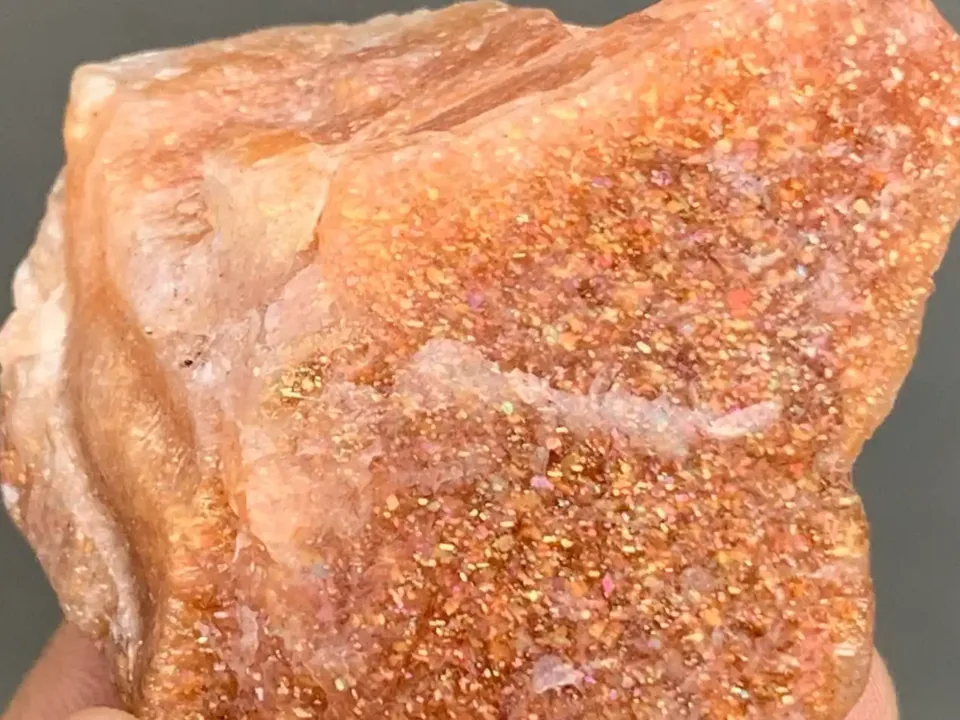
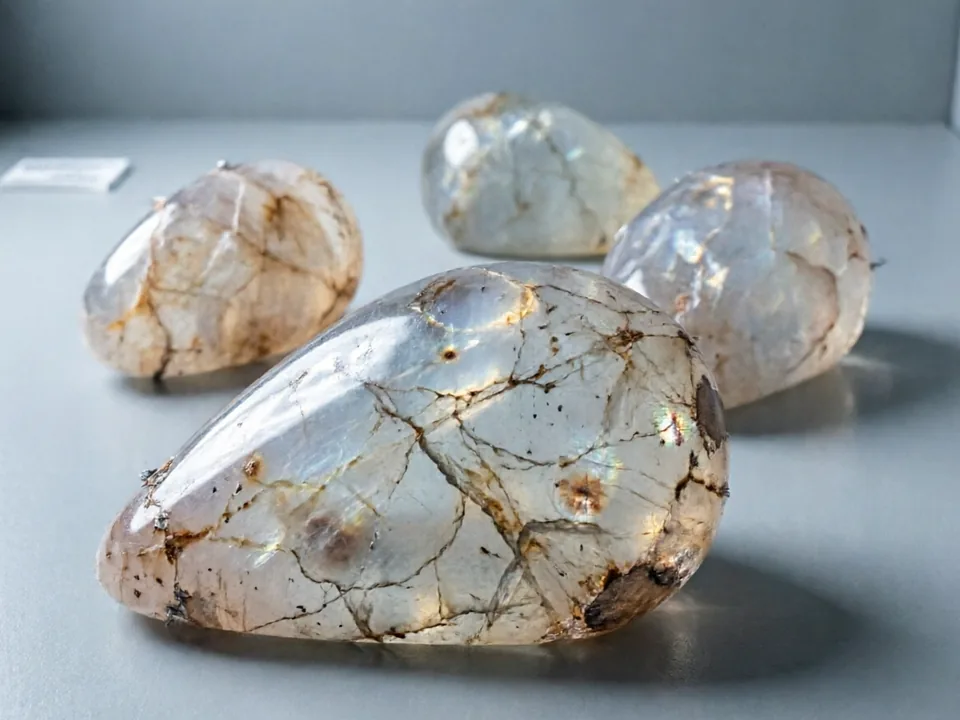
Sunstone shows a glittering, metallic sparkle called aventurescence from tiny platelet inclusions. Moonstone shows a soft, drifting sheen called adularescence from internal layering. If you want warm energy and a noticeable sparkle, pick sunstone. If you want a calm, pearly glow, pick moonstone.
Side-by-side comparison
| Factor | Sunstone | Moonstone |
|---|---|---|
| Optical effect | Aventurescence: glittering, metallic sparkle. | Adularescence: soft, floating blue or white glow. |
| Color | Warm orange, golden, red, or brown. | Colorless to white, peach, gray, or blue sheen. |
| Mineral family | Feldspar (plagioclase or orthoclase). | Feldspar (orthoclase with albite lamellae). |
| Hardness | About 6 to 6.5. | About 6 to 6.5. |
| Durability | Fine for most wear with a protective setting. | Fine for most wear with a protective setting. |
| Best use | Pendants, earrings, bracelets, protected rings. | Pendants, earrings, rings, bracelets. |
| Care | Soft damp cloth; avoid ultrasonic, steam, heat. | Warm soapy water and soft cloth; avoid ultrasonic. |
How to decide
Choose by the effect you can see in normal light. Sunstone's sparkle should be visible as a glitter across the stone; moonstone's glow should drift as you tilt it. Do not rely on a seller's bright spotlight, which can make a weak effect look stronger than it is. For an everyday ring that takes knocks, a bezel setting is a more practical choice for either stone.
Care and next steps
Both are feldspar minerals of similar hardness, so the same care applies: use a soft, damp cloth, dry promptly, and avoid ultrasonic cleaners, steam, abrasives, and harsh chemicals unless a jeweler confirms the piece can tolerate them. See the full Sunstone guide, the Moonstone guide, and the crystal care reference.
Bottom line
Sunstone wins for a warm, glittering sparkle. Moonstone wins for a soft, calm glow. Their hardness is similar, but the safer everyday choice depends on the individual stone's inclusions, cut, thickness, and setting as much as the material name. Confirm material disclosure and return terms before buying.
FAQ
Are sunstone and moonstone the same hardness?
Yes, both are feldspar minerals with a Mohs hardness around 6 to 6.5, so they need similar care and are best protected by a bezel or other protective setting in an everyday ring.
How can I tell sunstone and moonstone apart?
Sunstone shows a glittering, metallic sparkle called aventurescence and usually has a warm orange or golden color. Moonstone shows a soft, floating blue or white glow called adularescence and is usually paler.
Which is better for a ring, sunstone or moonstone?
Neither is universally more durable. Both have similar hardness; compare the individual stone's inclusions, cut, thickness, and protective setting before choosing a ring.
Sources: GIA sunstone reference, GIA moonstone reference, and the GemVerity editorial method. Updated: 2026-08-14.