Stone library / Trade name requiring identification
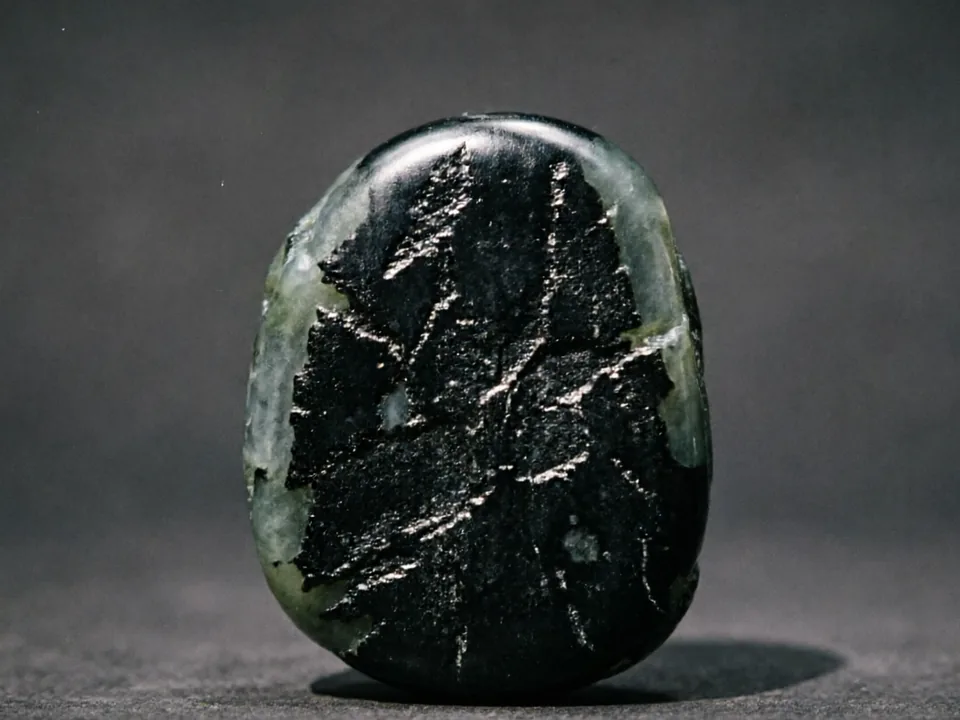
Black Jade
Black Jade is a commercial description, not one guaranteed mineral identity. It may refer to nephrite, jadeite, serpentine, or another dark ornamental material, so the first buying question is the tested material rather than the color name.
1. Identity and definition
Black Jade is a broad market label. It may describe black nephrite, graphite-bearing nephrite, black jadeite, serpentine, dyed material, or another dark stone. Mineral identity must be stated before value is assessed.
2. Composition and color
Graphite or other inclusions can darken nephrite, while different minerals create different luster, translucency, density, and fracture behavior. A flashlight edge test is only a clue, not a laboratory identification.
3. Sources and geological setting
Black nephrite and other dark jade-like materials occur in China, Canada, Russia, New Zealand, and other jade-producing regions. Geological setting and locality claims require documentation.
4. Treatment and natural status
Dyeing, bleaching, polymer filling, coatings, and imitation materials are possible. A dark color and the word jade do not prove natural untreated nephrite or jadeite.
5. Cutting and jewelry use
Nephrite is valued for toughness and works well for bangles, pendants, beads, plaques, and carved forms. Designers often use black and pale zones for contrast. Avoid thin edges and poorly supported bangles.
6. Meaning and emotional context
Black jade traditions often emphasize steadiness, dignity, grounding, and protection. These are cultural meanings, not evidence of shielding, healing, or emotional control.
7. Market context and value
Price depends on actual species, toughness, texture, translucency, color, carving, size, treatment, and reliable origin information. A mineral report is useful for expensive material.
8. Astrology, folklore, and care
Five-element, grounding, and protective claims belong to cultural practice. Nephrite is tough but can still scratch or chip. Avoid hard impact, harsh chemicals, and abrasive polishing. Clean with a soft damp cloth.
Editorial buying boundary
Ask for the exact mineral identity, treatment disclosure, report scope, condition, and return terms. Black color does not prove jadeite, nephrite, natural origin, or higher value.
Evidence boundary: Color, a photo, a seller nickname, or a spiritual claim cannot by itself prove identity, origin, treatment, or value.
Use this guide as a starting point
For a costly or disputed stone, ask for species, treatment, and origin information in writing. An independent laboratory report is stronger evidence than a marketing phrase.
Return to the stone libraryEducational guide only, not a gemological identification report. See our method and care guides.