Stone library / Quartz & Silica / Chalcedony & Agate
Cherry Blossom Agate
A source-aware guide to the Cherry Blossom Agate market name, patterned chalcedony, treatment questions, jewelry durability, buying checks, and practical care.
Practical takeaways
Cherry Blossom Agate is a seller-facing market name rather than a formally defined mineral species or universally standardized agate variety. Material sold under the label is generally presented as patterned chalcedony or agate, but the name alone does not prove composition, natural color, treatment status, or origin.
- Cherry Blossom Agate is a market label; the name alone does not establish a standardized mineral identity.
- Dyed, bleached, waxed, coated, or assembled material should be identified separately from untreated material.
- Quartz hardness is commonly about 6.5 to 7, but thin slices, edges, fractures, and settings determine practical durability.
Buying boundary: Ask for the material name, treatment status, measurements, construction, and return terms in writing.
What the name means
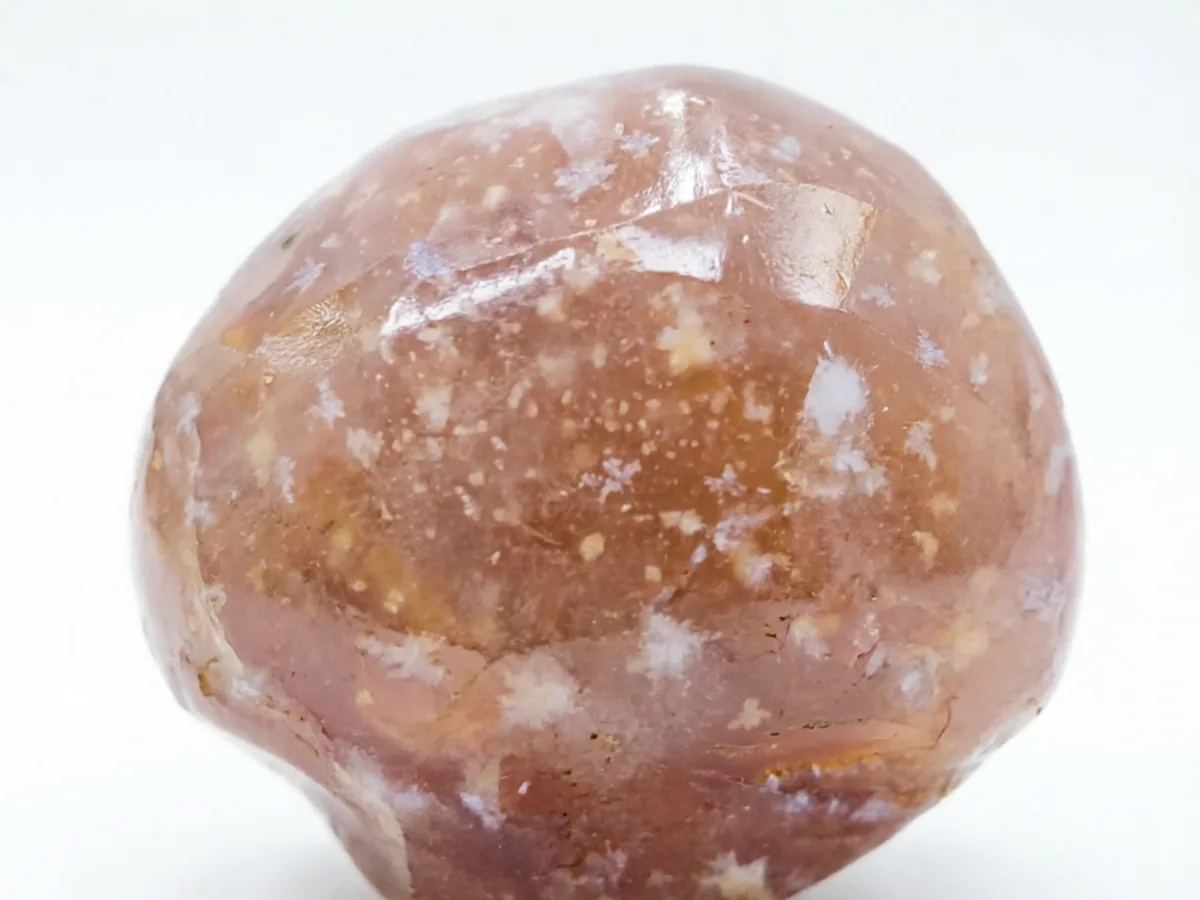
Cherry Blossom Agate is commonly sold as chalcedony or agate with pale, plume-like, orbicular, or flower-like internal patterns. Those visual descriptions are useful for shopping, but they are not a laboratory definition. Sellers may apply the label to materially different products, so identity should be supported by disclosure or testing rather than inferred from a photograph.
Pattern, color, and identity limits
Pieces may show translucent to opaque areas, cream, pink, peach, red, brown, or gray tones, and plume-like or orbicular patterns. Color, transparency, inclusions, zoning, fractures, polish, and treatment can vary between samples. A flower-like pattern does not by itself establish mineral identity, geographic origin, natural color, or value.
Treatment and disclosure questions
Ask whether color is natural and whether the material has been dyed, bleached, waxed, coated, stabilized, filled, or assembled. Treatment is not automatically a defect, but it should be disclosed because it can affect color stability, cleaning limits, durability, and price. A natural-looking pattern does not prove untreated status.
Cherry Blossom Agate in jewelry
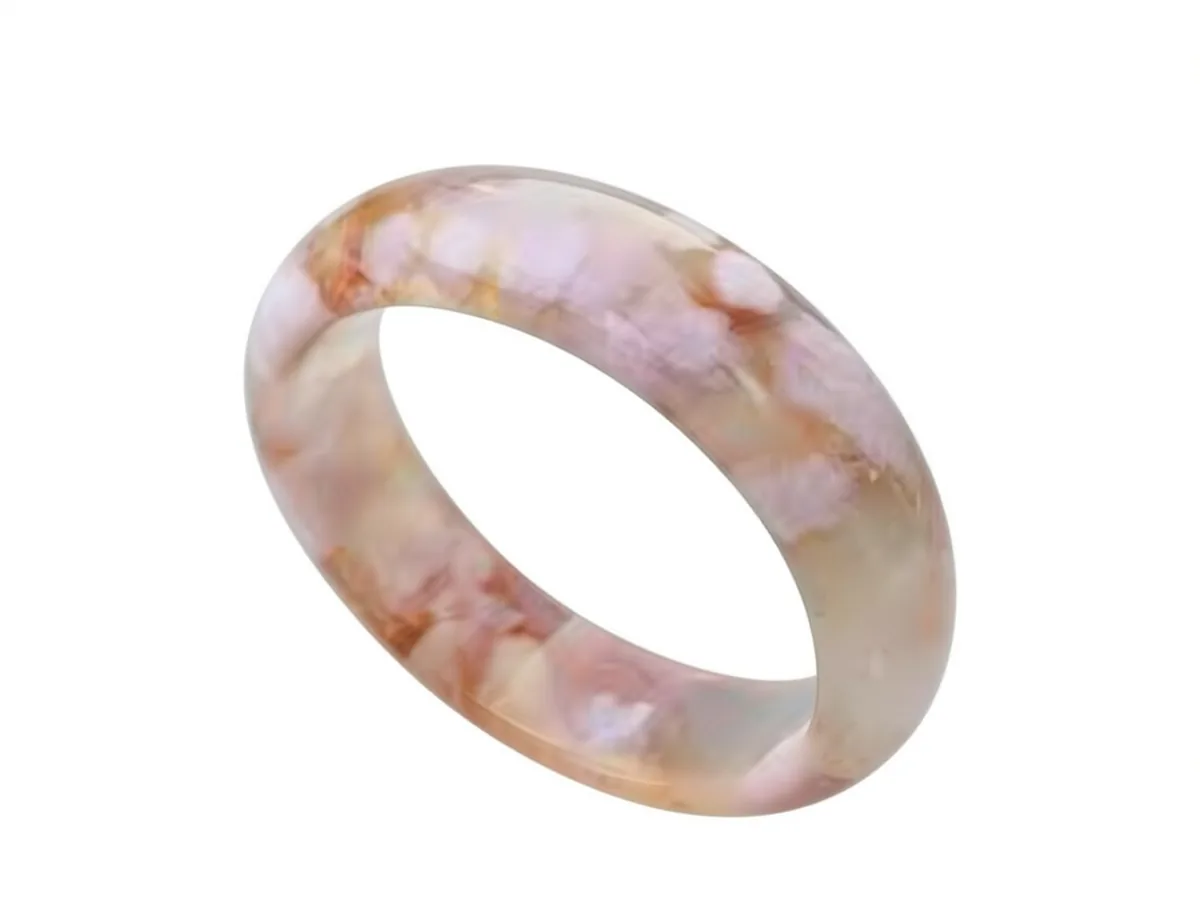
Cherry Blossom Agate is sold as beads, cabochons, pendants, carvings, earrings, and ring stones. Pendants and earrings generally receive less impact than rings. Thin pieces, sharp edges, surface-reaching fractures, drilled beads, and poorly protected settings need more caution than thick, well-polished cabochons.
Care and daily wear
- Wipe with a soft damp cloth and dry the piece fully.
- Avoid abrasive powders, strong acids or alkalis, solvents, and prolonged exposure to perfume.
- Do not soak dyed, porous, assembled, or coated material unless the construction and treatment are known.
- Store the piece away from harder stones and protect thin edges from impact.
- Use ultrasonic or steam cleaning only when a qualified jeweler has confirmed that the exact material and setting can tolerate it.
For a costly or disputed piece, a photograph or home scratch test is not a substitute for professional identification.
Meaning without medical claims
Cherry Blossom Agate may carry symbolic, spiritual, or personal meaning for some buyers. Claims about growth, renewal, calm, confidence, or similar themes are cultural or personal interpretations, not evidence that the material treats illness, changes body function, or guarantees emotional or financial outcomes.
What to ask before buying
Ask what the seller means by “Cherry Blossom Agate,” whether the identification is supported, whether color or clarity has been treated, and whether the piece is solid, filled, coated, assembled, or imitated. Request dimensions, setting material, care limits, origin claims, and return terms in writing. Compare like with like instead of relying on a generic price per carat.
Continue the material check
Compare agate with chalcedony and read the care guides before choosing a piece for daily wear.
Return to Chalcedony & AgateSources: GIA Gem Encyclopedia, the local Agate editorial source note, and the GemVerity editorial method. Last reviewed: 2026-08-06. This is an educational guide, not a gemological identification report.