Stone library / Meteorite material
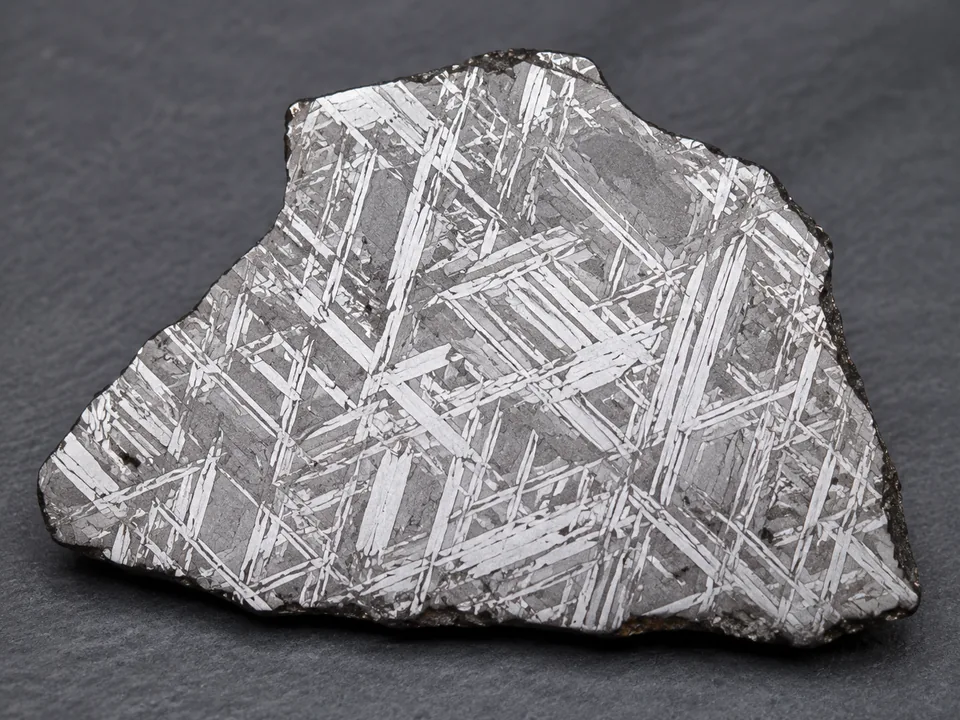
Gibeon Iron Meteorite
Gibeon Iron Meteorite is a trade description for iron meteorite material associated with Namibia. A Widmanstatten pattern, a seller story, or a photo cannot independently prove meteoritic origin, treatment, or provenance.
1. Identity and definition
Gibeon is an iron meteorite, primarily an iron-nickel alloy, known for the Widmanstatten pattern revealed after cutting, polishing, and controlled etching. Identity depends on provenance and material evidence.
2. Composition and color
Iron and nickel form the main alloy, with kamacite, taenite, and other phases contributing to the pattern. Surface color can change with oxidation and protective coating.
3. Sources and geological setting
Gibeon meteorites are associated with a fall in Namibia and are found as fragments across a large strewn field. A claimed meteorite source should be backed by documentation, not just a metallic appearance.
4. Treatment and natural status
Cutting, polishing, acid etching, oiling, plating, and sealing are normal preparation steps rather than proof of fakery. Rust, stabilizer, coatings, and restoration should be disclosed.
5. Cutting and jewelry use
Slices are set into pendants, rings, cufflinks, and inlays. Cutting and etching reveal the pattern, while a sealed or plated surface can reduce corrosion. Avoid bending thin slices.
6. Meaning and emotional context
Meteorites often carry cultural themes of origin, resilience, and connection to space. These themes are storytelling, not evidence of special energy, protection, or personal transformation.
7. Market context and value
Price depends on authenticated material, pattern, size, preparation, corrosion, provenance, and setting. Documentation and corrosion control are central to value.
8. Astrology, folklore, and care
Planetary, grounding, protection, and energy claims are cultural interpretations. Moisture is the main risk: remove jewelry before bathing or swimming, keep it dry, and ask a specialist about rust.
Practical buying and care answers
What to check first
Ask whether the material is meteoritic, how it was identified, whether it is etched, coated, sealed, repaired, or plated, and how to manage corrosion. Iron meteorite jewelry can rust when finishes are damaged or moisture is retained, so keep it dry and follow the maker's care instructions.
Evidence boundary: A photograph, seller nickname, locality story, or cultural claim cannot by itself prove species, origin, treatment, value, or performance.
Frequently asked questions
Can a photograph identify Gibeon Iron Meteorite?
No. A photograph can show appearance but cannot by itself prove the material, origin, treatment, construction, or value.
What should I ask before buying?
Ask for the exact material name, treatment status, condition, measurements, report details when relevant, care limits, and return terms.
How should I care for it?
Use conservative, material-appropriate cleaning and avoid impact, harsh chemicals, and unverified ultrasonic or steam cleaning.
Use this guide as a starting point
For a costly or disputed stone, ask for species, treatment, and origin information in writing. An independent laboratory report is stronger evidence than a marketing phrase.
Return to the stone librarySources: GIA Gem Encyclopedia and the GemVerity editorial method. Last reviewed: 2026-08-09. This is an educational guide, not a gemological identification report.